
← Buyer Resources
Tall Scratching Post: How Much Stretching Room Does Your Cat Need?
Choose a tall scratching post by checking continuous scratching height, standing room, overhead clearance, and stability for your cat's reach.
Contents
A tall scratching post should give your cat enough uninterrupted gripping surface to reach upward and pull back while its body extends comfortably. The useful measurement is the scratching area your cat can actually reach, not the height of a decorative topper. Watch a natural stretch, note the paw height, and check that the base remains steady under a pulling motion.
There is no single height that suits every cat. Body length, preferred stance, access around the post, and the position of the scratchable material all affect the result. A shorter post with a clear usable section can sometimes be more practical than a taller design whose lower half is blocked and whose top is purely decorative.
First, watch a stretch rather than arranging one
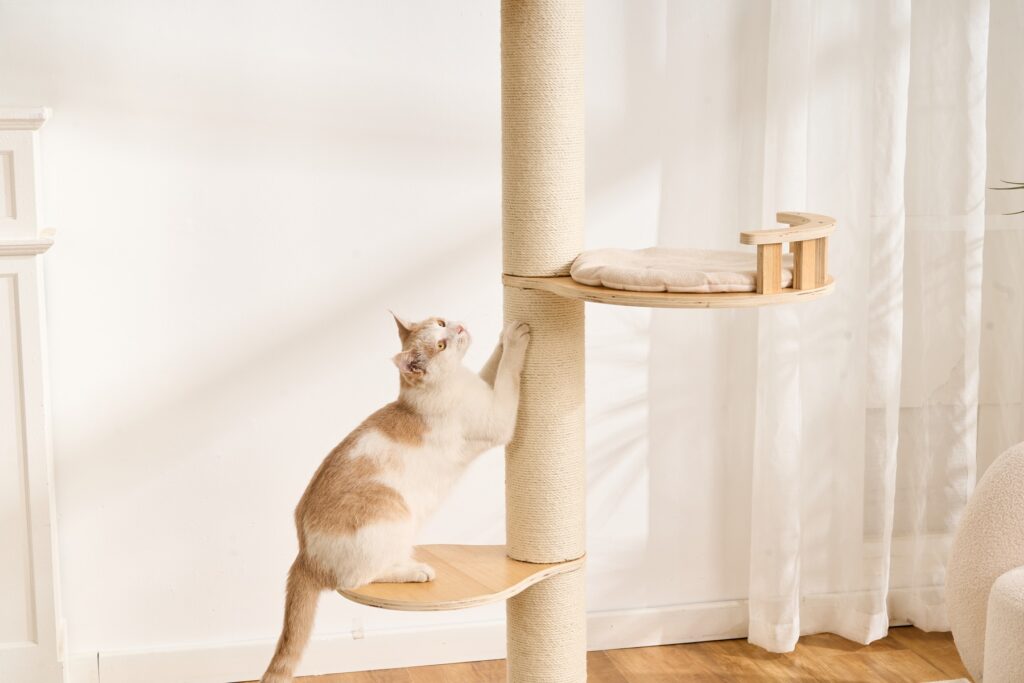
Choose a moment when your cat naturally scratches an accepted upright surface. Stand back and watch where the front paws reach and where the hind feet remain. Notice whether the cat rises onto the back feet, leans diagonally, or keeps a more compact posture. That tells you what the new post needs to accommodate.
Do not lift your cat upright against a ruler or hold its paws at a target height. Besides making the measurement unreliable, handling can make the scratching area unpleasant. A short video taken from the side is often easier to review than a single photograph, because it shows both the initial reach and the pulling motion.
If you have no accepted post, observe the existing target without encouraging damage. A sofa arm can show the approximate paw level and body angle. Use that observation to choose an alternative near the same area. You do not need an exact laboratory measurement; you need to avoid buying a post that obviously interrupts the cat’s usual reach.
Measure the working section in three parts
Begin at the level where the cat’s back feet will stand. If the base is raised, this may be above the room floor. Then identify where the scratchable surface starts and ends. A bare lower stem, thick fabric collar, or decorative flower can shorten the continuous area even when the overall product looks tall.
Write three separate measurements: overall height, uninterrupted scratching length, and the height of the top of that working area above the standing surface. These numbers answer different questions. Overall height helps with room fit; the working area helps with scratching; the standing surface determines how the cat’s body relates to both.
Ask for clarification if a product page gives only one height. A photograph may show where rope or fabric begins, but perspective can distort the proportions. A clear answer about the exact model is more useful than estimating from a staged picture of a cat whose size you do not know.
Leave some practical room beyond the observed paw level instead of selecting a post that ends exactly at the first measurement you record. Cats do not make the same movement every time, and the initial reach can differ from the deepest stretch. Avoid turning that allowance into a universal number; compare it with the individual cat and the product’s usable shape.
Inspect the post from the paw level to the floor
Check what sits above the paws
A top platform can be a useful resting place, but its underside may interrupt an upward reach. Look at the clearance around the post. If a broad shelf sits immediately above the preferred paw height, the cat may have to bend its wrists or shift sideways rather than continuing a comfortable scratch.
Decorative leaves, fruit shapes, fabric caps, and hanging ornaments also change access. They are not automatically a problem; they simply need to be considered separately from the working surface. Ask whether your cat can reach and pull without catching claws in loose trim or having the paws meet a hard projection.
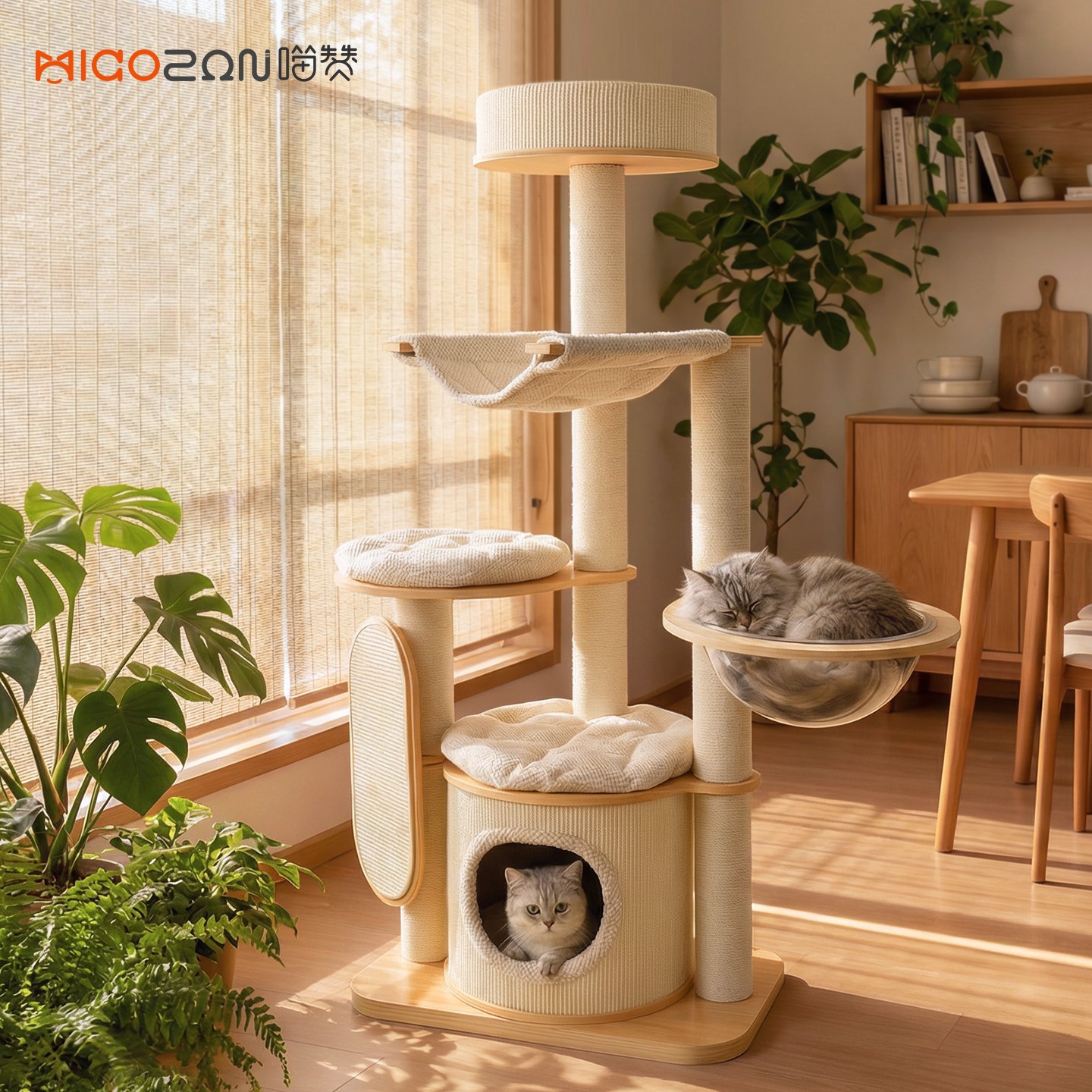
For a tree with several short posts, do not add their lengths together. Three short sections separated by platforms do not provide one continuous tall stretch. Such a tree may still be valuable for climbing and resting, but a separate upright post can be the simpler way to provide the missing scratching motion.
Stability matters as much as height
A long reach creates a pulling movement well above the floor. The post must be assembled correctly and used as instructed. Check the base on the floor where it will stand; a display on thick carpet does not tell you how it behaves on smooth flooring. Follow all fixing or anchoring requirements supplied for that model.
With the cat elsewhere, inspect the joints and apply gentle hand pressure in the directions a scratching cat is likely to pull. This does not establish a safe load limit, but it can reveal an incorrectly tightened connection or an obviously rocking base. Stop using a product that is damaged or cannot be made stable according to its instructions.
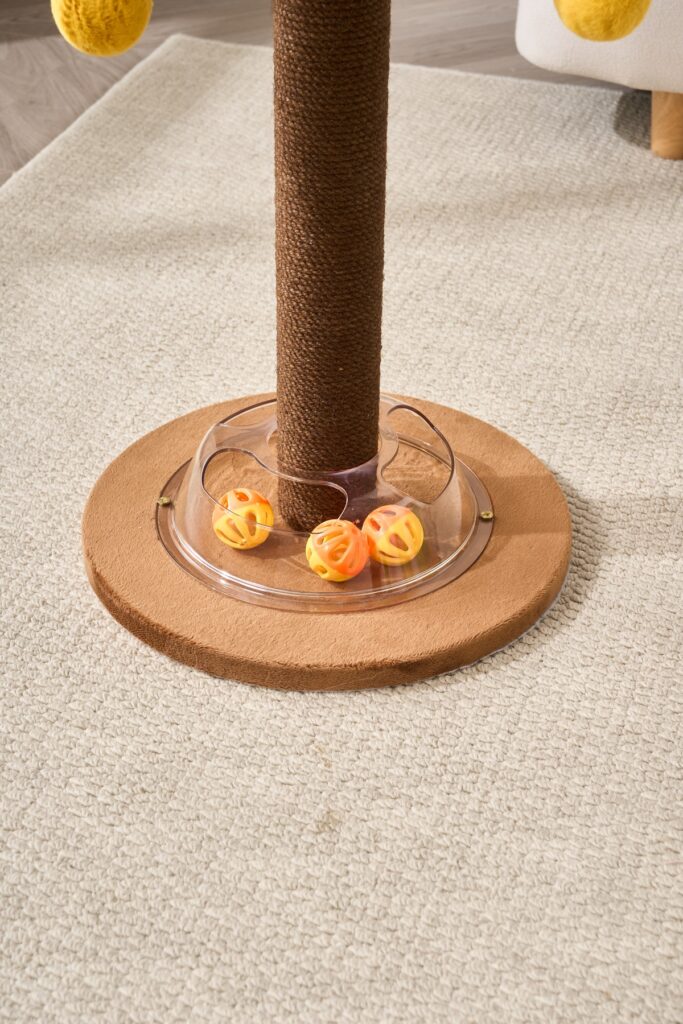
Do not balance books, stones, or other loose weights on the base as a substitute for proper assembly. Avoid tying a freestanding post to nearby furniture with exposed cords. Those changes can add new hazards while concealing the reason the post moves. Ask the supplier for the correct fix or choose another suitable design.
The Ohio State University scratching guide encourages choices that fit the cat’s scratching preference. For a tall post, that means checking both the upward movement and the surface, rather than treating height as the only decision.
Give the whole body room to stand
Place a sheet of paper or a small removable marker where the post base would go, then look at the approach. Could the cat stand a comfortable distance from it with its body extended? A post behind a side table may technically fit while leaving too little space for the cat’s back feet and tail.
An upright scratching position often needs more surrounding room than a resting cat. Check the nearby sofa, curtain, radiator, and doorway. If the cat must angle around an obstacle to reach the material, the preferred furniture edge nearby may remain easier to use. Access is part of the scratching area even though it is not printed in the dimensions.
A corner position can work when the post has a clear accessible side and the base sits correctly. Do not push it so tightly into the corner that the cat cannot use the intended surface. Revisit the position after cleaning or rearranging furniture, because a small shift in a chair can close the approach.
Use the symptoms to find the real mismatch
| What happens during use | A likely detail to inspect | A useful next step |
|---|---|---|
| Paws repeatedly reach beyond the material | Working section too short or low | Compare a longer uninterrupted section |
| The cat stops when the base shifts | Floor grip, assembly, or stability | Correct the installation before another trial |
| The cat scratches only one low patch | Personal posture or surface preference | Observe before assuming more height is needed |
| A platform meets the paws at full reach | Clearance above the working area | Compare a less obstructed shape |
| The cat reaches the post from an awkward angle | Insufficient approach space | Move nearby obstacles or reposition the post |
These are prompts for inspection, not diagnoses. A cat may change its movement for reasons unrelated to the product. If the pattern is new, or the cat seems uncomfortable, consult a veterinarian. A different post height should not be used to explain away stiffness, reluctance to rise, or sensitivity around a paw.
Compare a standalone post with a scratching tree
A standalone design lets you place the working surface beside the exact place your cat wants to scratch. It can also be easier to compare continuous length. A tree combines functions but may locate its posts wherever the structure requires them, which is not always where the cat’s favorite full stretch can happen.
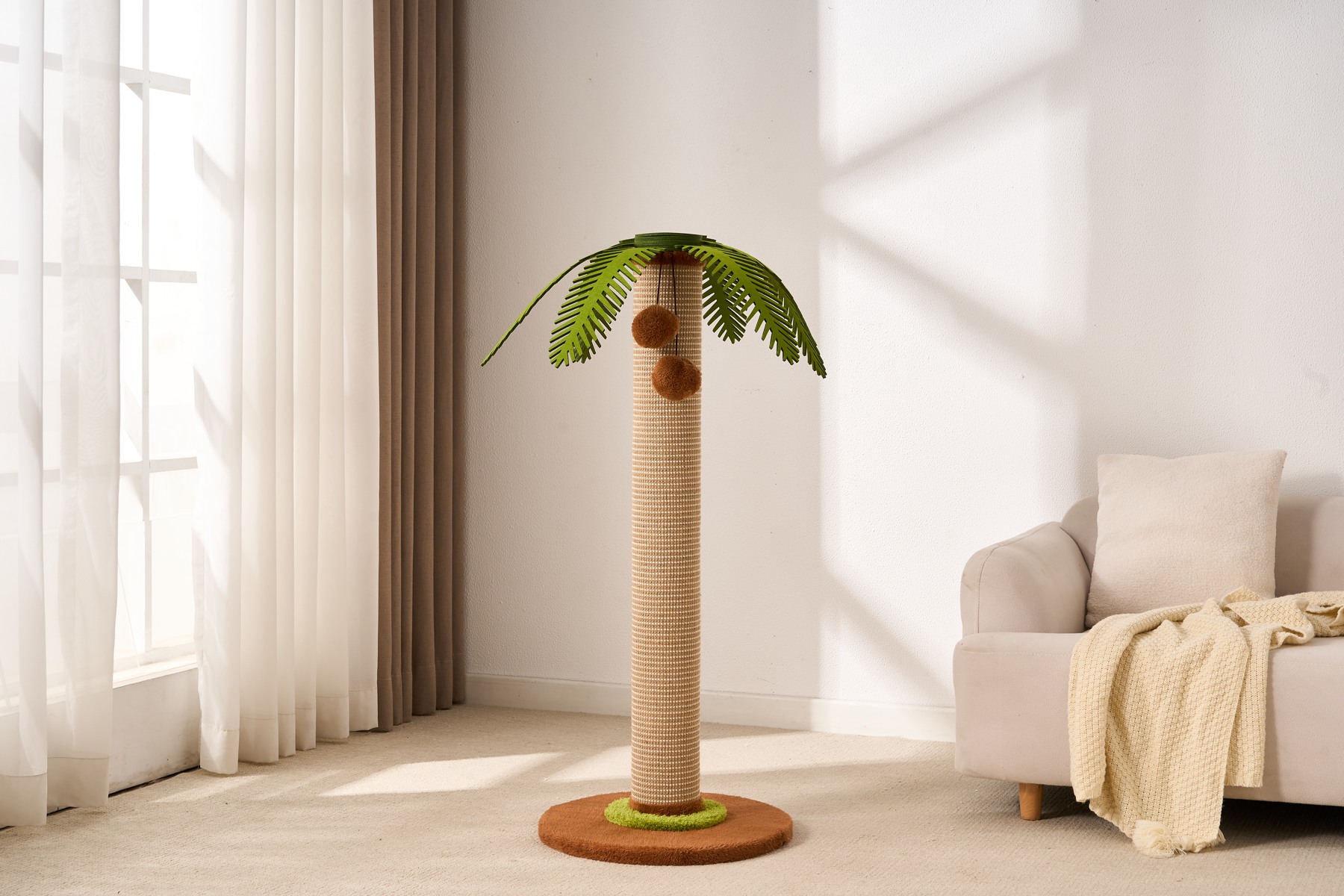
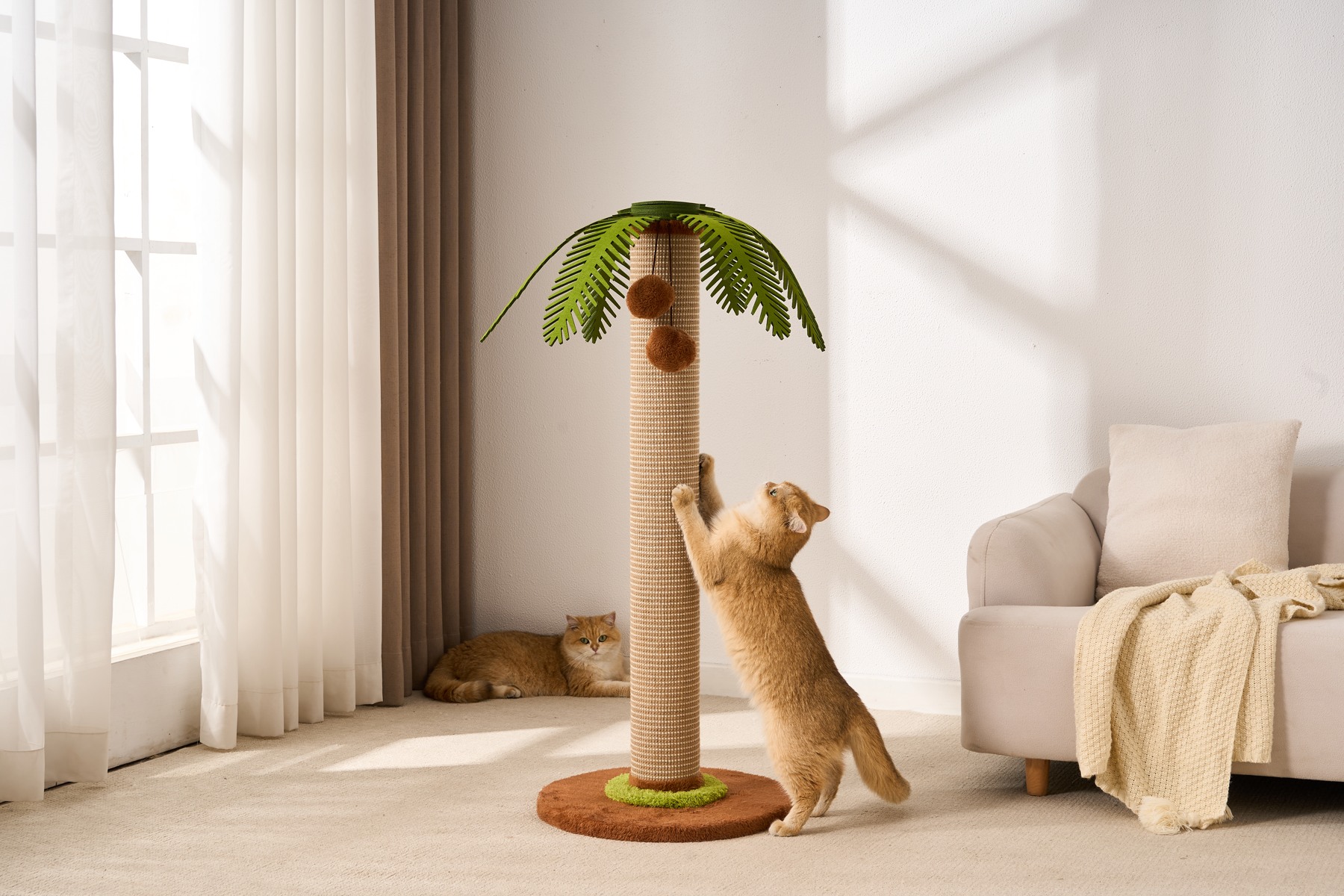
Look at Miaomeng’s Palm Scratching Post as an example of a dedicated post, and the Tall Cactus Cat Tree as a different arrangement. Use the product galleries to identify potential working sections, then request the measurements needed for your cat. A tall name does not establish a particular usable scratching height.
Keep an accepted horizontal scratcher or older post while introducing the new option. A cat can prefer different movements at different times. The new post does not need to replace every existing surface to be useful, and removing the familiar option can make the introduction harder to interpret.
Make the first week informative
Start close to the established scratching location, with the post stable and the approach open. Let the cat investigate freely. You can acknowledge voluntary scratching with a calm familiar reward, but do not place its paws on the material. The cat needs to choose the movement for the trial to tell you whether the fit works.
Keep a brief note of where the paws reach, whether the cat completes a long pull, and whether the base stays still. Notice use after naps, when a cat may naturally stretch. Do not move the post after every period of inactivity; it may simply have missed the usual scratching opportunity.
If the cat ignores it, check placement before buying a taller replacement. If it uses the same material at another location, the issue may be convenience. If it approaches but withdraws when the product moves, address stability. If it scratches happily lower down, the post may already provide the preferred motion despite the unused height above.
Before ordering, keep a short note with the cat’s approximate reach, the clear standing area, and the required uninterrupted section. Send those details with the Miaomeng model name through the form below if you need help comparing the product information. This turns “I need a tall post” into a question that can be answered with useful measurements.
Frequently asked questions
How tall should a tall scratching post be?
Tall enough for your cat’s preferred upward reach and pulling movement, with suitable clear working surface. Measure from the standing level and check where the scratchable material ends. Overall height alone cannot answer the question.
Is the tallest available post always the best choice?
No. Stability, texture, approach space, and uninterrupted scratching length matter too. Extra height above an obstruction or decorative cap may add little useful stretching room. Choose a sound design that fits the observed movement.
Can I use the posts on a cat tree instead?
Yes, if one section provides the reach and access your cat needs. Check each continuous section separately. Several short posts between platforms do not create the same working area as one long post.
Why does my cat still use the sofa beside a tall post?
The post may differ in texture, stability, or location, or the working area may be obstructed. Watch the whole scratching movement and adjust one detail at a time. Avoid assuming that the problem must be solved by buying more height.
Should a senior cat have a lower post?
Follow the cat’s comfortable movement and seek veterinary advice about new difficulty stretching. An easily reached surface may be useful, but age alone does not set one correct height. Keep accepted options available while reviewing access.
More from our resource center.
-

Tall Scratching Post: How Much Stretching Room Does Your Cat Need?
Choose a tall scratching post by checking continuous scratching height, standing room, overhead clearance, and stability for your cat's reach.
Read Guide -
Do Cats Need Cat Trees? What Indoor Cats Need From Their Space
Do cats need cat trees? Review your cat's climbing, resting, scratching, and observation choices to see what a tree would add to your home.
Read Guide -
Cat Bed Buying Guide: Match the Bed to How Your Cat Sleeps
Choose a cat bed that suits your cat's sleeping position, usable space, entry needs, and cleaning routine, with practical checks before buying.
Read Guide -
Horizontal Cat Scratcher: Is It Right for a Carpet-Scratching Cat?
Choose a horizontal cat scratcher by watching your cat's posture, checking floor grip, and placing the pad where carpet scratching already happens.
Read Guide -
How to Choose a Scratching Post Your Cat Will Use
Learn how to choose a scratching post by matching scratching direction, surface, usable height, stability, and placement to your cat’s habits.
Read Guide -
Where to Put a Cat Tree: Find a Spot Your Cat Will Actually Use
Find where to put a cat tree by checking your cat’s routine, window safety, room layout, climbing access, and comfortable routes down.
Read Guide
LET’S BUILD YOUR NEXT COLLECTION
Start with your market.
We’ll work through the details.
Send your selected models, target quantity and customization requirements.