
← Buyer Resources
Where to Put a Cat Tree: Find a Spot Your Cat Will Actually Use
Find where to put a cat tree by checking your cat’s routine, window safety, room layout, climbing access, and comfortable routes down.
Contents
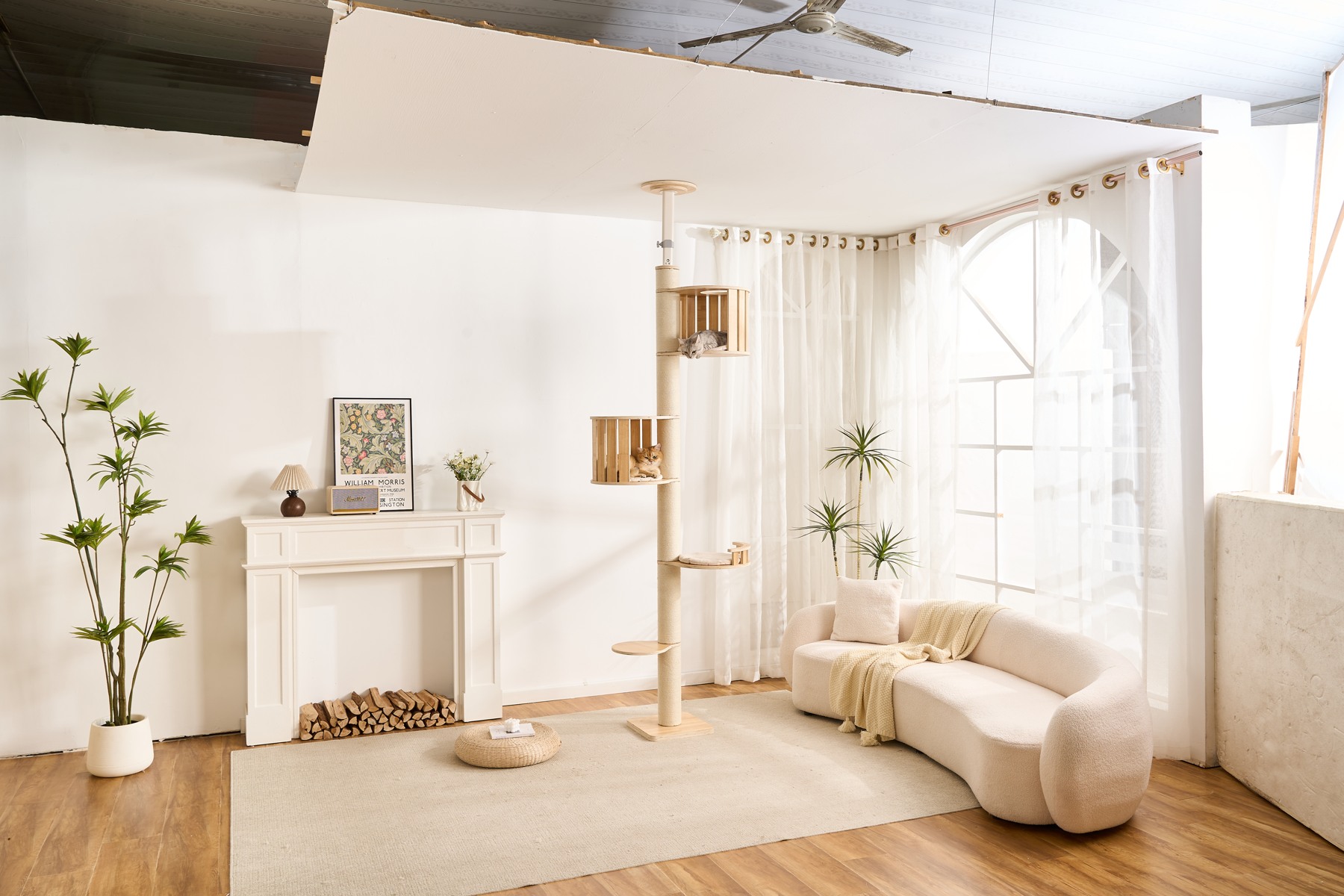
Put a cat tree in a room your cat already visits, with a clear route to its first platform and enough space to get down. A quiet edge of the living room often works better than an empty spare room. Near a secure window can be useful, provided the perch does not overheat, the window is properly secured, and cords stay out of reach. The best location is one your cat can choose comfortably while the furniture remains stable.
Start with your cat’s routine before moving your furniture. Where does your cat pause to watch the room? Which window attracts a daily visit? Where does your cat rest after a meal or a play session? These observations narrow the search faster than placing the tree wherever it looks most symmetrical. You can still create an attractive room, but the tree needs to fit a real habit.
Take a five-minute walk through your home
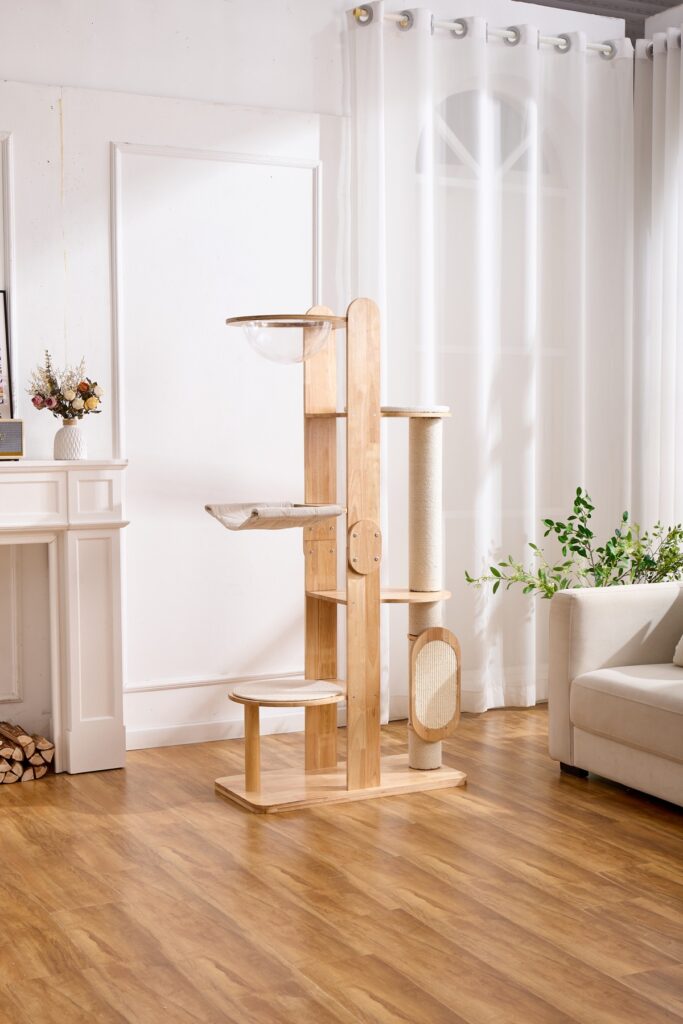
Walk through the rooms your cat can access and identify two or three possible locations. For each location, look at the floor, the approach, the view, and the way back down. A tree can fit within a corner on paper while an upper basket extends into a doorway. Measure the whole assembled shape rather than the base alone.
Imagine your cat approaching from its usual sleeping place. Can it reach the first step without squeezing behind a chair? Is the entrance to a lower cave facing an open area? Can it leave without landing on a toy basket? You are checking an everyday route, not just finding an unused patch of floor.
Now consider people. Open nearby doors fully, pull out dining chairs, and walk past carrying something bulky. If someone must turn sideways to pass the base, the tree is probably occupying a working route. A position that creates constant bumps or repeated moves is unlikely to remain a comfortable resting place.
Make a short list rather than repeatedly carrying an assembled tree around the house. Write one advantage and one problem for each candidate. “Good view, afternoon heat” is more useful than “nice corner.” It tells you exactly what to check before deciding.
Try the living room’s quiet edge first
For a cat that follows family activity, the living room can offer company without direct handling. Look for an edge where your cat can observe people from a perch while visitors and children can pass without touching the tree. Being in the same room does not mean being in the middle of every activity.
A position beside a sofa may work if the sofa does not block the lower steps or hide the scratching section. Check the room with people actually seated. A reclining footrest, a blanket hanging over the arm, or a side table moved for drinks can change the route your cat needs.
Avoid treating a loud television wall as the automatic focal point for the tree. If your cat leaves whenever the speakers are on, a nearby resting platform may also be avoided. Try a calmer side of the room where the cat can still see familiar people. The right distance depends on your cat’s response, so watch behavior during normal evening use.
Leave access to the scratching surface. A beautiful tree tucked tightly between two pieces of furniture may offer a good sleeping platform but almost no room for a full stretch. If scratching is one reason for buying it, stand back and check where the cat’s body will go when its paws are on the post.
Check a window over the course of a day
A window can provide a changing view, but the experience depends on more than sunlight. Check the location in the morning and again during the warmest part of the afternoon. Feel the sleeping surface after the sun has been on it. If it is unpleasantly hot to your hand, reconsider that position or provide reliable shading and another resting choice.
Secure the window before making it easier to reach. Do not assume a screen will support a cat leaning or jumping against it. Keep blind cords and curtain ties away from the climbing route, and make sure fabric cannot catch a paw or pull an unstable object down. These checks apply to nearby furniture as well as the tree itself.
Look outside from the approximate perch height. A quiet garden view and a narrow window facing a busy footpath can create very different experiences. If your cat watches calmly and then settles, that is useful feedback. If it stays tense, repeatedly rushes the glass, or cannot disengage, a less stimulating view may be a better choice.
The perch does not have to be pressed against the glass. A little separation can preserve access to curtains, allow cleaning, and keep a cat away from a hot or cold surface. Follow the tree’s installation instructions and maintain enough room for your cat to turn and step away.
Work out the bedroom arrangement before bedtime
A bedroom can suit a cat that already sleeps there, especially when the room stays quieter than shared spaces. Place the tree where the cat can reach it without using a sleeping person’s body as a launch pad. Check whether jumping down would land on bedding, a charging cable, or a narrow bedside table.
Think about your own sleep habits too. If you close the bedroom door at night, decide whether the cat will remain inside or outside and ensure the rest of its needs remain accessible. A tree should not encourage a routine that leaves a cat separated from essential resources when the door shuts.
Listen during the first few evenings. Movement that seems quiet in daylight may be noticeable when the room is still. If there is rattling, inspect the assembly before deciding the problem is simply the location. Do not conceal looseness by placing the tree against other furniture and hoping the noise stops.
For a cat that becomes active whenever you move in bed, a living room or study may provide a more suitable climbing area. The bedroom can still offer a simpler resting spot. You do not have to make one piece of furniture perform every function in every room.
Use corners carefully in small apartments
A corner can reduce the amount of open floor occupied by a tree, but it can also hide the entrance or leave only one narrow approach. Turn the lower opening toward a clear area. Check whether a cat can circle the base, use the scratching post, and step away when someone approaches.
Measure the upper outline. A hammock or platform that projects beyond the base can meet a door, curtain, or shelf even when the floor measurement looks correct. A strip of removable tape on the floor can show the footprint before assembly; use measurements from the actual model to check the space above it as well.
Keep a practical landing area. The tree should not require your cat to jump straight into the main walking path or onto a slippery object. In a narrow room, a lower layout with easier steps may make better use of the available space than a tall layout with an awkward descent.
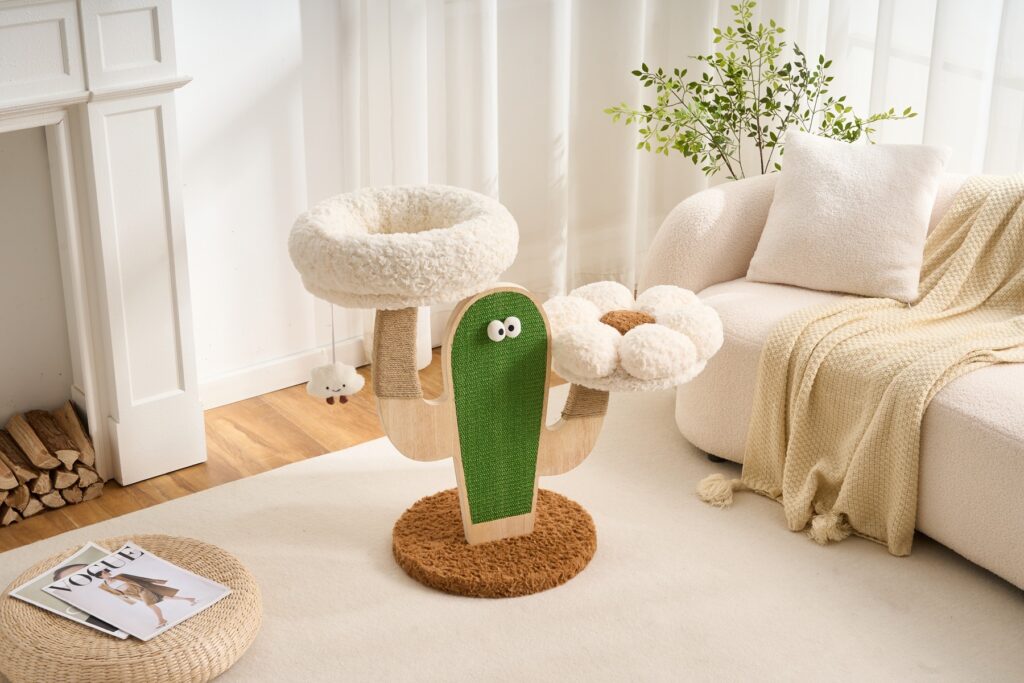
When comparing the cat tree collection, check the current dimensions and photos of the individual model. The E01 Wooden Cat Tree shows how platforms can extend beyond a narrow upright support, so allow space for the complete outline rather than measuring only a column.
Use the table below to compare candidates. It is a planning aid, not a rule that every home must follow.
| Candidate location | What makes it promising | What to check first |
|---|---|---|
| Living room edge | Company and a view of daily activity | Clear lower steps and an unobstructed scratching surface |
| Near a secure window | A changing outdoor view | Window security, cords, surface temperature, and a way to retreat |
| Quiet bedroom corner | Familiar sleeping routine | Night access, noise, cables, and the landing area |
| Study or home office | Predictable company during the day | Chair movement, desk wires, and access when the door closes |
| Spare room | Lower levels of activity | Whether the cat actually visits and can enter freely |
Give more than one cat a way out
In a shared home, pay attention to routes as well as the number of platforms. One cat can occupy a narrow lower step and make the upper beds difficult for another cat to leave. A tree beside a wall may offer a useful retreat for one cat yet feel like a dead end to another.
Watch ordinary use without placing cats together on the tree. Does one cat wait for another to leave before approaching? Does a cat pause at the bottom while another watches from above? These observations can help you decide whether to rotate the tree, clear an approach, or provide a separate resting place elsewhere.
The AAFP and ISFM feline environmental needs guidelines describe the value of separate resources and safe resting choices. Applied to a room layout, this means a shared tower should be part of a wider arrangement rather than the only desirable place every cat must compete to reach.
You do not need matching trees in every room. A separate bed or other appropriate perch can offer a different choice. What matters is whether the cats can access their preferred resources without repeatedly meeting in the same bottleneck.
Rule out unsuitable spots before making a final move
Keep the climbing route away from accessible cooking surfaces, open flames, and heaters. Do not use the tree as a convenient bridge to somewhere your cat should not reach. Look at nearby shelves and worktops too: adding height can change the accessibility of objects that were previously out of reach.
A busy entrance is usually worth reconsidering if doors swing into the tree or people frequently carry bags past it. A cat resting near the front door may also have to deal with unpredictable visitors. Observe whether that particular cat seems comfortable there instead of assuming every prominent spot is desirable.
Check floor contact without the cat on the furniture. The base should sit as intended by the maker. A thick rug, a floor transition strip, or uneven boards can cause rocking. Follow the specified installation and anchoring method; improvised weights do not establish that the structure is suitable or properly assembled.
Keep the tree separate from places that are regularly splashed or left damp. If you need to move it for every cleaning session, choose a location you can realistically maintain. A tree that blocks cleaning behind it may gradually collect dust and loose hair in places you cannot reach.
Introduce the new location without lifting your cat onto it
After moving the tree, let your cat investigate at its own pace. Keep the first approach clear and allow an easy retreat. You can sit nearby or offer an ordinary play session in the area, but do not make remaining on the tree a condition for receiving attention.
Leave familiar resting choices available. If the tree is replacing an older one, consider whether a safe familiar item can remain nearby during the transition. Avoid changing the room layout, bedding, cleaning scent, and tree location all at once when a smaller adjustment would answer the question.
Watch for useful actions rather than expecting an immediate nap. Sniffing the base, scratching briefly, stepping onto the first platform, and returning later all tell you something. A single dramatic photograph is less informative than repeated comfortable use during an ordinary week.
If your cat does not approach, change one factor at a time. Clear the route first, then reconsider the location or the height of the first step. Moving the tree several times in one afternoon makes it harder to identify what helped. Keep simple notes about the change and what happened afterward.
Check the result during normal household activity
Review the location when people are home, when the room is quiet, and when sunlight reaches the perch. A spot that works during a calm morning may become crowded during dinner or uncomfortable in afternoon heat. You are looking for reliable access throughout the times the room is normally used.
Notice how your cat leaves the tree. A hesitant descent, a jump onto a fragile object, or repeated attempts to use a nearby curtain suggests the route needs attention. Choose a layout that fits the cat’s present abilities rather than expecting it to become comfortable with a difficult gap.
Make cleaning part of the review. Can you remove cushions where the design allows, reach the lower surfaces, and inspect the joints? A little space around the furniture often makes daily care easier. Maintain the connections according to the maker’s instructions and reassess if movement or damage develops.
The final choice may be a compromise between two good locations. Prefer the one that your cat uses comfortably and that your household can keep clear. A modest tree in a useful position can contribute more to daily life than a larger tree that everyone has to work around.
Choose a location from your cat’s existing routine, check the full route, and observe how it works in daily life. If you need help comparing a tree’s footprint, platforms, or sleeping spaces with your room, use the form below and describe the space you have.
Frequently asked questions
Should a cat tree always be next to a window?
No. A secure window with a comfortable surface temperature can be a useful feature, but a clear approach and a calm resting experience matter too. A cat that avoids the view may prefer a perch facing the room.
Can I put a cat tree behind the sofa?
Yes, if the base sits correctly, the usable surfaces remain accessible, and your cat has enough room to enter and leave. Avoid a narrow gap that hides the scratching area or makes it difficult to inspect and clean the furniture.
Is the hallway a good place for a cat tree?
A wide, quiet section may work. A narrow route with swinging doors or frequent foot traffic is less promising. Check actual movement through the space rather than measuring only the base.
How long should I wait before trying another location?
There is no fixed deadline for every cat. Give a cautious cat time to investigate while observing its routine. Correct an unsafe or inaccessible position immediately; otherwise, make one deliberate change at a time and look for repeated comfortable use.
Should I move the cat tree when my cat gets older?
Reassess the access route whenever your cat’s abilities change. A lower first step, a shorter descent, or a different resting arrangement may help. A sudden change in jumping or movement deserves a discussion with your veterinarian rather than being treated only as a furniture preference.
More from our resource center.
-

Horizontal Cat Scratcher: Is It Right for a Carpet-Scratching Cat?
Choose a horizontal cat scratcher by watching your cat's posture, checking floor grip, and placing the pad where carpet scratching already happens.
Read Guide -
How to Choose a Scratching Post Your Cat Will Use
Learn how to choose a scratching post by matching scratching direction, surface, usable height, stability, and placement to your cat’s habits.
Read Guide -
Where to Put a Cat Tree: Find a Spot Your Cat Will Actually Use
Find where to put a cat tree by checking your cat’s routine, window safety, room layout, climbing access, and comfortable routes down.
Read Guide -
Reading model specifications and product galleries
Use the actual model name and parameter sheet to distinguish similar products in your sourcing list.
Read Guide -
Packaging details to confirm before shipment
Product protection, component identification and clear instructions belong in the packing discussion.
Read Guide -
Reviewing a cat furniture sample
Use an agreed specification to structure the sample discussion before moving to a production order.
Read Guide



LET’S BUILD YOUR NEXT COLLECTION
Start with your market.
We’ll work through the details.
Send your selected models, target quantity and customization requirements.