
← Buyer Resources
Horizontal Cat Scratcher: Is It Right for a Carpet-Scratching Cat?
Choose a horizontal cat scratcher by watching your cat's posture, checking floor grip, and placing the pad where carpet scratching already happens.
Contents
A horizontal cat scratcher is a sensible first choice when your cat repeatedly scratches a rug or carpet while standing on all four feet. It gives that familiar downward pulling movement an acceptable surface. Choose a pad large enough for the cat to stand on, stop it sliding, and place it beside the patch already being scratched. A floor scratcher will be less useful if your cat actually prefers reaching up a sofa arm.
The important clue is the movement, not the damage alone. A cat can pull carpet near a doorway, stretch against the upright side of a stair, or dig under a loose rug. These look like one “carpet problem” afterward, but they ask for different arrangements. Watch one complete scratching session before choosing a replacement surface.
Read the evidence your carpet provides
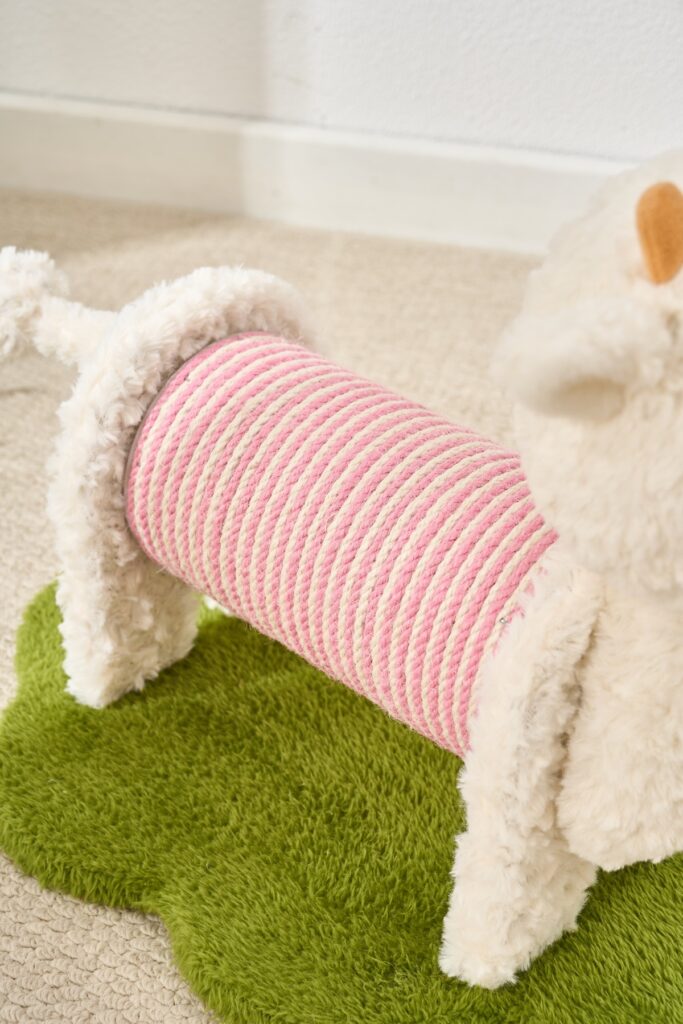
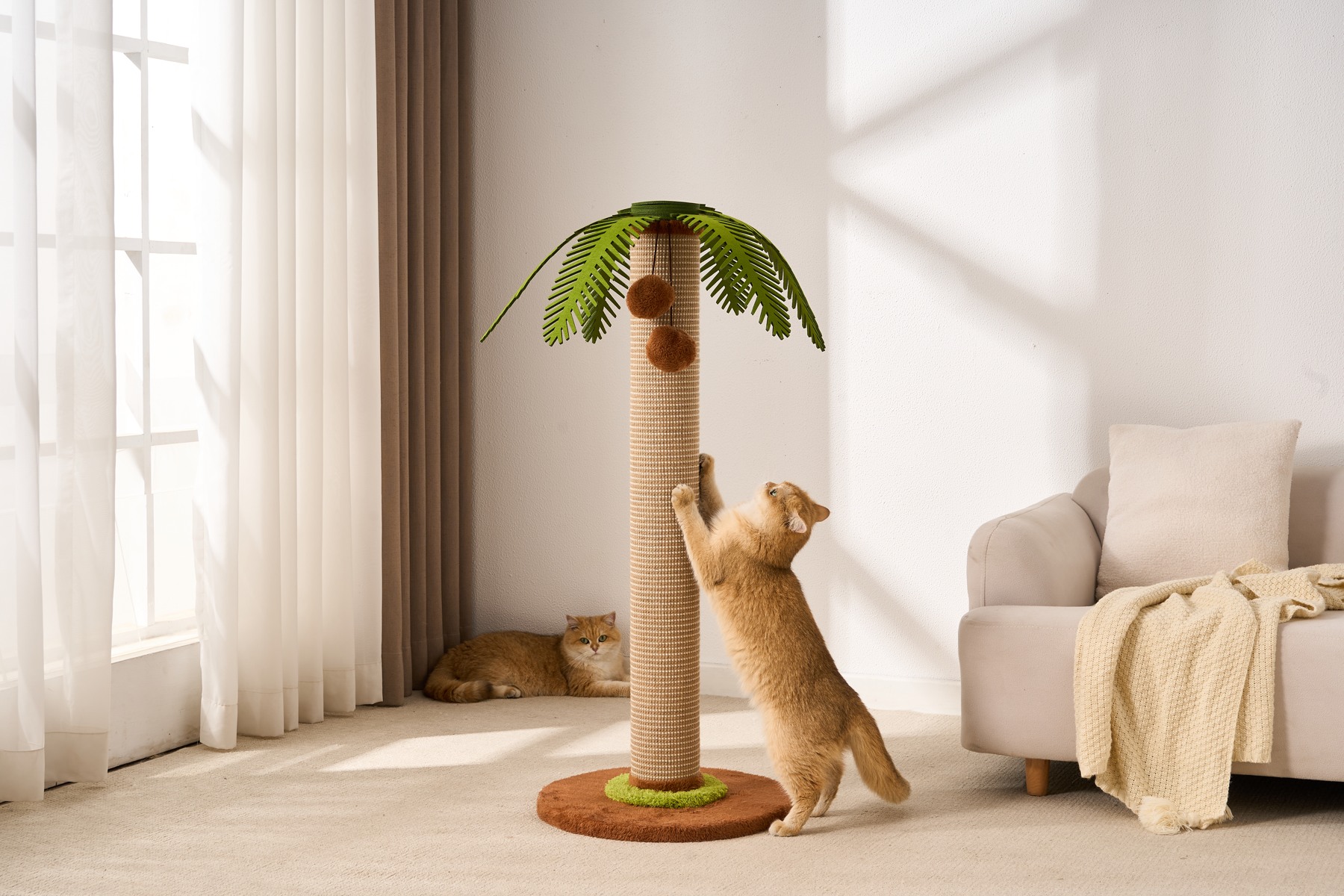
Start with the position of the front paws. When both paws reach ahead across the floor and then pull back toward the chest, a flat pad can reproduce the action. When the paws climb a vertical edge, the cat may need an upright scratching option even though carpet is the material being damaged. A low sloping board can be worth trying when the cat works at an angle.
Look at where the back feet stand. A cat that plants them on the rug uses its own weight to hold the surface still. A tiny lightweight board positioned in front of those feet loses that advantage. If the board scoots away on the first pull, the familiar carpet is likely to feel more satisfying.
Notice the setting as well. Does scratching follow a nap on the sofa? Does it happen beside the room entrance when someone arrives home? Is the preferred patch the corner nearest a window? Write down the location and the event. You are looking for a usable place in the cat’s routine, rather than an empty space that happens to fit the product.
Photograph the patch before covering it. That gives you a simple reference for new damage. It also prevents every old loose thread from being interpreted as failure on the first day. The goal is a gradual shift toward an appropriate surface, and that is easier to see when you know what the starting point looked like.
Run one small placement experiment
Put the horizontal cat scratcher directly beside the targeted patch, with its long direction aligned to the cat’s usual body position. Leave room at the approach end. Do not wedge it behind a door or place a toy basket where the cat normally stands. If the original spot is on a busy walkway, choose the closest position that lets both people and the cat pass safely.
Begin with a single change. Keep the room arrangement, cleaning fragrance, and other scratching options familiar. If you introduce a new board, move the sofa, cover the carpet, and spray a deterrent at the same time, you will not know which change affected the result. A short note after a few normal scratching opportunities tells you more than repeated rearrangement within one evening.
If the cat sniffs the board and walks away, leave it available. Inspection is not rejection. If the cat scratches beside it, check alignment and standing space before replacing the material. If the front paws touch it but the whole thing shifts, solve that movement first. Each response points to a practical adjustment.
The Ohio State University guide to scratching explains that surface preference matters. Use that as a reason to offer a suitable alternative, rather than expecting every cat to accept the same texture.
Make the surface stay where you put it
Check the pad on the actual floor, not only on the shop display or a carpeted table. A base that holds on one surface can slide on another. With the cat elsewhere, press down near the middle and apply gentle sideways pressure. This is a basic household check, not a substitute for the maker’s assembly instructions or any stated use limits.
A suitable nonslip layer may help when the product instructions and floor finish permit it. Keep the layer entirely beneath the pad, with no loose corners to chew. Do not improvise with exposed sticky tape, hanging ties, or a heavy object balanced on one edge. A solution that stops sliding but introduces a loose cord or unstable weight creates another problem.
If the pad rocks because the floor is uneven, find a level spot close by. Check whether loose packaging or an incorrectly fitted insert is causing the movement. A frame designed to hold a replaceable pad needs the insert seated properly. Never assume that a board is fully assembled simply because it arrived in one outer carton.
Some movement comes from size rather than grip. When only the front paws fit, the cat may push a narrow board away before it can bear down. Compare the usable scratching area with your cat’s stance. Decorative edges, bowls, and handles can make a product look wide while leaving only a small patch for the paws.
Flat, curved, or gently sloped?
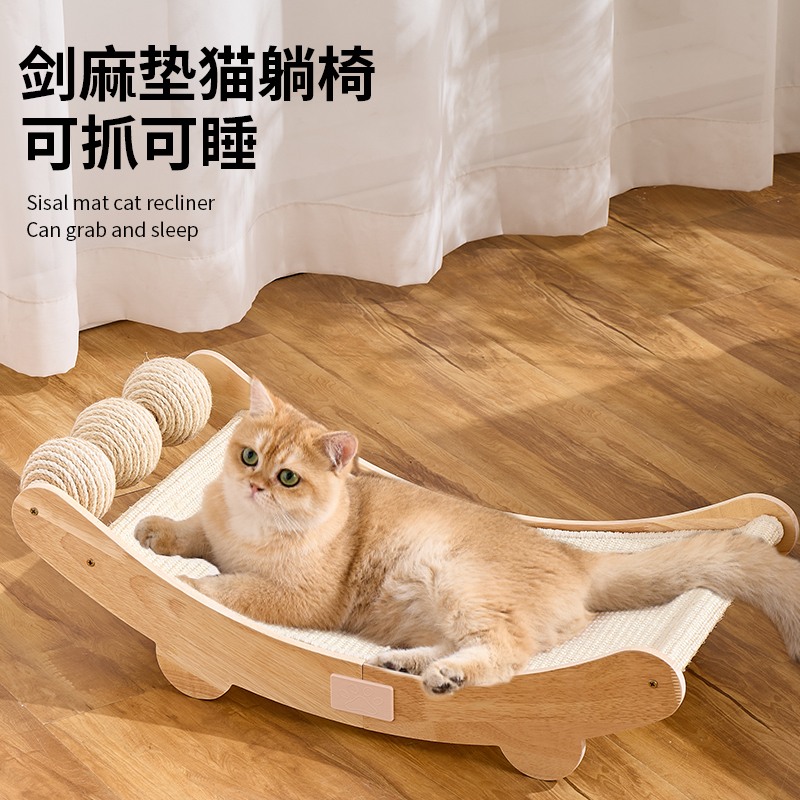
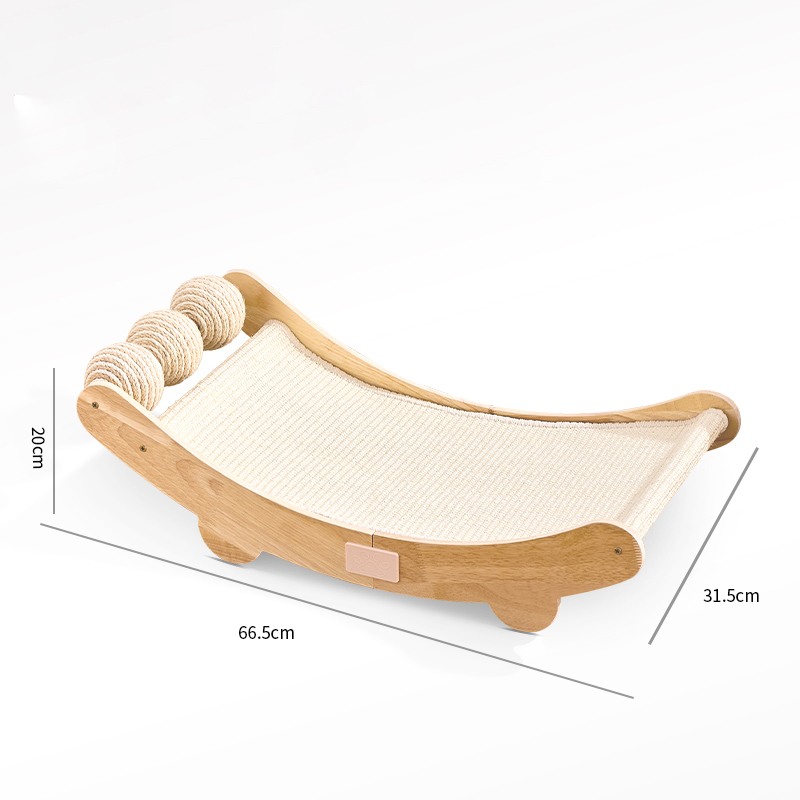
Flat boards make it easy to copy a floor-level scratching posture. Curved scratchers may combine scratching with somewhere to lean or rest. A slope changes wrist and shoulder position, so it should be treated as a different option rather than a prettier version of the same pad. You do not need all three at once; start with the shape that most closely matches the behavior you see.
| What you observe | Useful first trial | What to check next |
|---|---|---|
| Long forward reach along a rug | A broad flat board | Enough space for the full stance |
| Scratching against the rise of a step | A stable slope or upright option | Whether the paws are reaching upward |
| Alternating lounging and scratching | A low curved scratcher | Usable area beyond the resting hollow |
| A pad pushed across smooth flooring | A stable pad with suitable floor grip | Base contact and correct assembly |
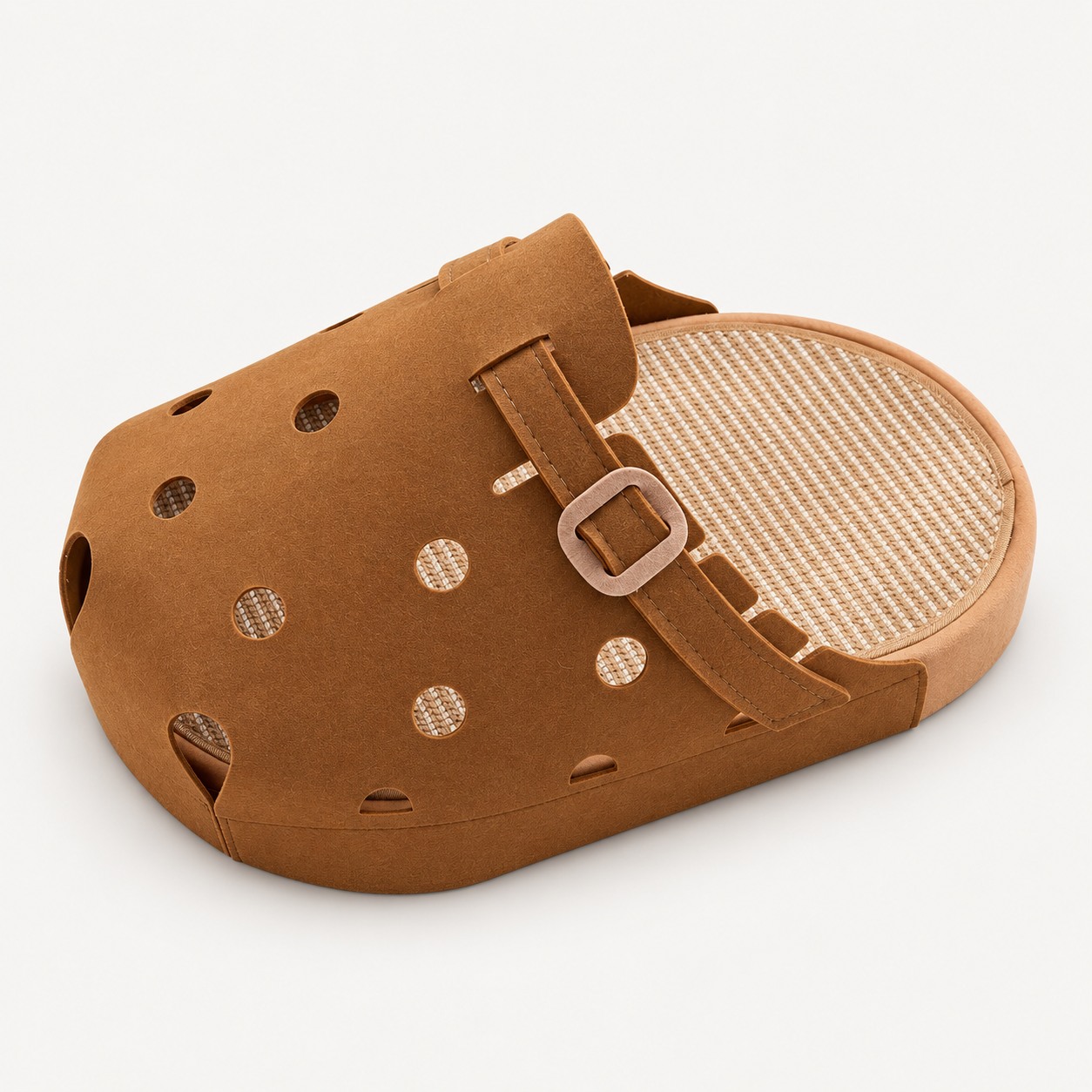
The product’s outline is only part of the choice. A deep curved center may suit resting but leave less level space for scratching. A raised border may contain debris but interrupt the cat’s preferred reach. Look at the surface the paws will actually contact, and imagine where the rest of the body will be.
You can compare the profiles of Miaomeng’s Wave Cat Lounger and Arched Cat Lounger. Use the galleries to understand shape, then confirm dimensions and surface details for the exact model. Neither a name nor a photograph can establish what an individual cat will prefer.
Introduce the board without handling the paws
Allow the cat to approach and leave freely. You can briefly move a wand toy near the area and then put the toy away, but avoid dragging the cat onto the surface. Pressing its paws into the board can turn a promising spot into an unpleasant handling experience. A quiet acknowledgment or a small familiar reward after voluntary use is easier to repeat consistently.
Some cats respond to catnip, and others do not. It is optional, not proof that a scratcher is correctly chosen. If you use a product intended for cats, follow its directions and start sparingly. A board covered in powder may attract rolling rather than scratching, leaving you no clearer about whether the surface works.
Give the cat access after its usual waking time. You do not need to stage a formal training session. If scratching often follows a stretch beside the sofa, placing the board within that route is more useful than repeatedly carrying the cat to a distant corner. Keep the approach calm when it does use the surface.
Avoid scolding at the carpet. A sudden shout may interrupt the action in front of you without making the new pad more appealing. Instead, make the acceptable option convenient and manage access to vulnerable areas in a way that does not frighten the cat. A clean protective covering can be useful temporarily if it is secure and safe underfoot.
Separate scratching from other carpet damage
A cat that claws at the bottom of a closed door may also be trying to get through the door. A pad nearby provides scratching space, but it does not resolve frustration about access. Consider what is happening on either side and whether the household routine can offer a calmer alternative. Keep the response consistent so the cat is not repeatedly drawn into an exciting door-opening game.
Loose fibers pulled up with the mouth need a different level of attention. Remove unsafe damaged material from reach, and seek veterinary advice if your cat is eating carpet, string, or pieces of the scratcher. A texture change is not a reliable answer to ingestion. Do not leave long loops or unraveling threads available while waiting to see what happens.
Also distinguish ordinary scratching from a sudden change in movement. If a cat stops stretching, avoids a previously used surface, or seems uncomfortable when placing its paws, arrange a veterinary check. A new board cannot tell you whether pain is involved. You can still provide easy low-level access while you obtain individual advice.
Judge progress by use, then adjust one thing
After several ordinary opportunities, review your notes. Did the cat use the board at least occasionally? Does carpet damage appear to be slowing? Was the pad still in place afterward? A single scratch is not a complete result, but it is useful evidence that the texture and location have some appeal.
If location seems right and the board remains steady, try a different surface while keeping the same position. If the cat uses the material elsewhere, keep that material and move the board closer to the established target. If it scratches only upright furniture, add an appropriate upright option instead of buying increasingly elaborate floor boards.
In a home with several cats, observe which cat actually uses the new surface. One enthusiastic user can leave the impression that the problem is solved while another continues scratching the carpet in a different room. Separate choices in the places each cat already visits may be more practical than a single crowded station.
Before choosing another shape, measure the usable area, check the base, and identify the scratching posture. If you want help comparing a Miaomeng model, send the product name and a description of the spot through the form below. Those details are more useful than simply asking for a scratcher that stops all carpet damage.
Frequently asked questions
Will a horizontal cat scratcher stop carpet scratching completely?
It may help redirect the behavior when the posture, material, and placement suit the cat. There is no guarantee that one board will replace every preferred spot. Keep it stable, make it accessible, and review what the cat actually does before changing several things at once.
Should the scratcher cover the damaged patch?
It can sit beside the patch or over it if the position remains level and safe. Do not create a trip hazard in a doorway. Protecting the old surface is most useful when a suitable scratching alternative stays close enough to be an obvious choice.
Is a floor scratcher suitable for a cat that also uses a post?
Yes. A cat may use more than one orientation during the day. Keep a successful post and offer a floor option where floor scratching occurs. You do not need to remove an accepted surface to persuade the cat to try a new one.
Why does my cat sleep on the board instead of scratching it?
The shape or location may be attractive for resting. Watch at other times, especially after waking, before deciding it has failed. If it is never scratched, check whether the texture, usable area, or orientation differs from the surfaces your cat chooses elsewhere.
How do I clean up cardboard pieces around a pad?
Move the cat aside, collect loose pieces, and clean the surrounding floor. Follow the pad’s care instructions rather than soaking cardboard. Replace it when the working surface or frame no longer stays sound, and remove any fragments your cat tries to eat.
More from our resource center.
-

Horizontal Cat Scratcher: Is It Right for a Carpet-Scratching Cat?
Choose a horizontal cat scratcher by watching your cat's posture, checking floor grip, and placing the pad where carpet scratching already happens.
Read Guide -
How to Choose a Scratching Post Your Cat Will Use
Learn how to choose a scratching post by matching scratching direction, surface, usable height, stability, and placement to your cat’s habits.
Read Guide -
Where to Put a Cat Tree: Find a Spot Your Cat Will Actually Use
Find where to put a cat tree by checking your cat’s routine, window safety, room layout, climbing access, and comfortable routes down.
Read Guide -
Reading model specifications and product galleries
Use the actual model name and parameter sheet to distinguish similar products in your sourcing list.
Read Guide -
Packaging details to confirm before shipment
Product protection, component identification and clear instructions belong in the packing discussion.
Read Guide -
Reviewing a cat furniture sample
Use an agreed specification to structure the sample discussion before moving to a production order.
Read Guide

LET’S BUILD YOUR NEXT COLLECTION
Start with your market.
We’ll work through the details.
Send your selected models, target quantity and customization requirements.