
← Buyer Resources
Cat Bed Buying Guide: Match the Bed to How Your Cat Sleeps
Choose a cat bed that suits your cat's sleeping position, usable space, entry needs, and cleaning routine, with practical checks before buying.
Contents
Choose a cat bed by watching where your cat already sleeps and how much space it uses. A cat that stretches across a sofa usually needs an open sleeping area; a cat that tucks into a small sheltered corner may appreciate a bed with sides or a cover. Measure the space inside the bed, check how your cat will enter, and put cleaning ease ahead of decorative extras.
A bed cannot make a busy location peaceful or turn an unsuitable size into a comfortable one. Before comparing colors, spend a little time observing a normal nap. Your cat is already showing you useful information about support, shelter, temperature, and the view it likes to keep.
Follow your cat through three naps
One sleeping position can be misleading. A cat may curl tightly during a cool morning and lie long on a warm afternoon. Notice several naps in different parts of the day. You do not need a formal diary: a few photographs taken from a respectful distance are enough to show whether your cat consistently seeks an edge, an enclosure, or a broad flat surface.
Include the surface under the cat. A folded towel, a firm sofa cushion, and a soft blanket are different experiences. If your cat repeatedly leaves a fluffy cushion for a nearby firm surface, extra loft may not be the feature to prioritize. The familiar choice matters more than what feels luxurious when you squeeze it in your hand.
Look at the exit as the cat wakes. Does it step straight out, climb over an edge, or need to push a soft side down? A bed that is comfortable once occupied can still be awkward to enter and leave. For a cat whose movement has changed, choose easier access and discuss the change with a veterinarian rather than interpreting it solely as a new style preference.
Follow the sleeping pose
If your cat sleeps in a tight circle
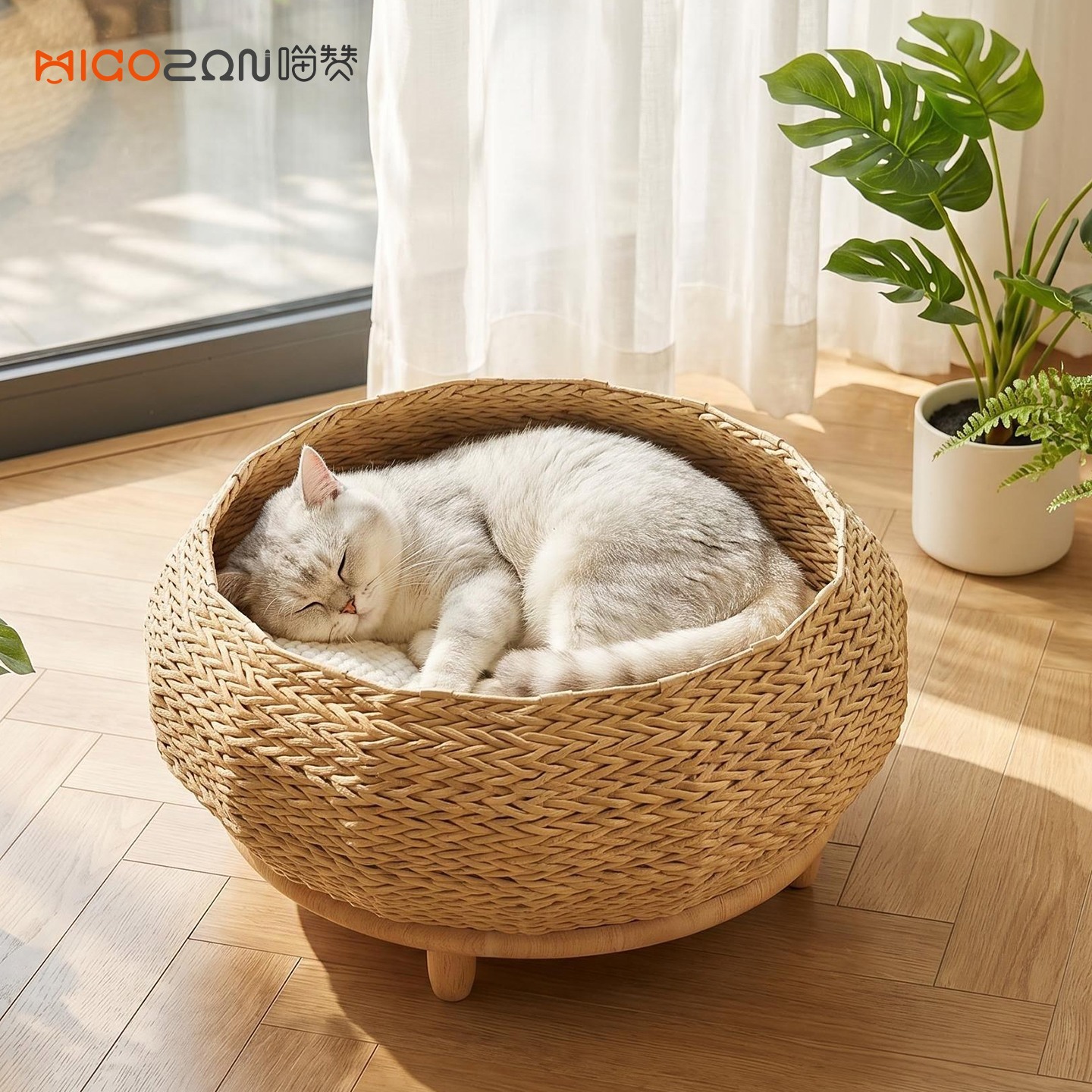
A round or oval bed with a supportive boundary may suit a habitual curler. Check the space within the boundary, not across the outside decoration. Thick bolsters can occupy a surprising amount of the advertised width. Your cat should be able to settle into its usual position without being forced to twist its shoulders or leave part of its body on the rim.
The side does not need to be high on every edge. Some cats like resting their head on a shallow bolster while keeping a clear view of the room. A lower opening can provide that combination. Feel whether the border holds its shape or folds inward into the sleeping area when lightly pressed.
Do not assume the smallest available bed is best because the cat likes boxes. A box used for a brief hide is not necessarily the same size it would choose for a long rest. Leave room for a change of position. A cat may enjoy contact with one edge while still needing enough space to uncurl without leaving the bed altogether.
If your cat stretches out or changes sides often
An open mat or broad bed makes it easier to lie sideways and extend the legs. Measure the cat’s relaxed sleeping outline, including the part of the body that commonly rests on the surface. You do not need to include a fully extended tail if it normally hangs loosely beyond the resting area, but do account for shoulders, hips, and outstretched paws.
Check shape as well as length. A narrow rectangle can appear long enough while leaving little room to roll from one side to the other. A deep circular bed may offer width but lose useful space where the sides slope inward. Compare the actual flat or supported sleeping area with the photograph of your cat’s usual pose.
For a cat that likes the sofa, start near the existing resting place. A bed on the floor in a distant room changes height, location, and surface together. If the chosen bed is designed for floor use, give it a calm nearby position rather than placing it insecurely on a narrow piece of furniture to copy the sofa’s height.
If your cat chooses enclosed corners
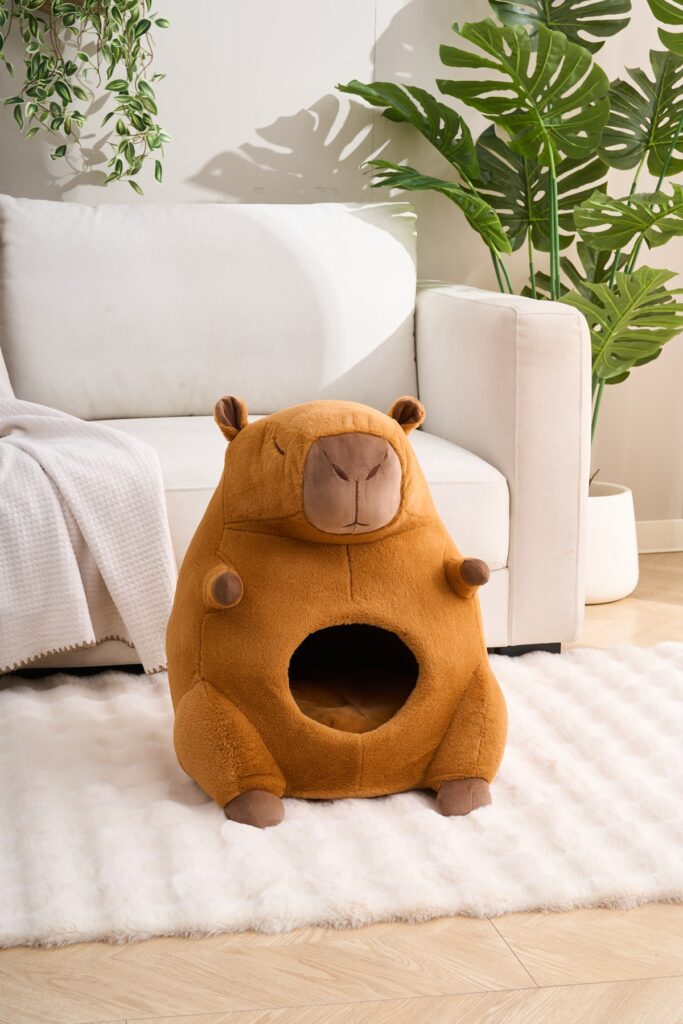
A covered bed can offer shelter, but the entrance needs careful attention. Your cat must be able to turn, lie down, and leave voluntarily. Check the doorway separately from the outside body of the bed. Tall decorative ears or a rounded roof can make an enclosure look spacious while the usable entrance remains small.
Watch whether the cat likes concealment or simply a quiet location. A cat that sleeps under a side table while looking into the room may be happy with an open bed in that sheltered spot. A fully enclosed cave changes visibility and access. Try to preserve the feature your cat actually chooses before adding more enclosure.
Ohio State University’s information on resting areas describes the value of comfortable places where cats can withdraw. The practical choice is to offer a resting place that your cat can approach and leave without being disturbed.
If a soft roof collapses when the cat leans against it, follow the product instructions for reshaping and support. Do not insert improvised wires or rigid pieces with exposed ends. A covered bed needs to function as designed, with no loose loops, damaged seams, or fabric that blocks the exit.
Turn your observations into a short list
- For the habitual curler: compare the inside width of a modest rimmed bed with the familiar sleeping outline.
- For the sideways sleeper: put a broad uninterrupted surface and room to roll ahead of high sides.
- For the shelter seeker: preserve the quiet setting and check visibility through the entrance.
- For the cat that moves with the temperature: plan more than one comfortable resting choice.
- For hesitation at an edge: check the step-over height and seek advice about a new movement change.
Use the short list to narrow the choice, not to label your cat permanently. A cat can enjoy both open and sheltered beds. If you already have one successful resting place, the next bed may be most useful in another room or for another temperature rather than duplicating the same arrangement.
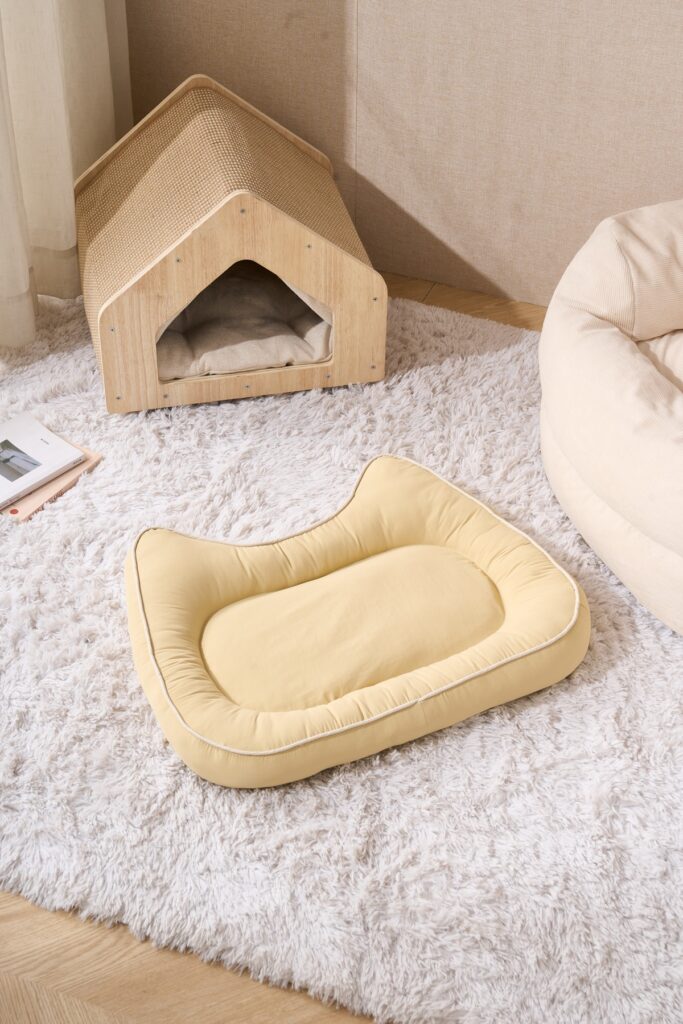
Compare Miaomeng’s Ruffled Floral Cat Bed with the Cat Ear Bed by looking at their actual sleeping areas and entrances. Confirm the current model details rather than inferring size, washability, or filling from a photograph. Decorative names describe appearance, not a guaranteed match for a particular cat.
Check the cleaning routine before buying
Imagine a normal wash day. Can the sleeping insert be removed? Does the care label permit machine washing, hand washing, or surface cleaning only? How will the filling dry completely? These questions affect everyday usefulness more directly than whether the trim matches a throw cushion.
Do not assume that a removable cover means the entire bed is machine washable. The cover and insert may have different instructions. Closures should finish securely, with no accessible sharp pull or loose piece left beside the sleeping area. Inspect seams after cleaning, especially where a cat kneads before settling.
If your cat sheds heavily, look for areas where hair will collect. A smooth open surface may be easier to maintain than deep folds, although the appropriate cleaning method still depends on the material. Decorative ruffles and small recesses can take more attention. Choose a routine you can realistically maintain instead of planning unusually frequent complicated cleaning.
Keep another resting choice available while a bed dries. Returning a damp insert to a covered shell can leave hidden moisture. Follow the care directions and let all layers dry fully. If the bed retains an unpleasant odor or has damaged filling that cannot be cleaned properly, replacement may be more practical than adding stronger fragrance.
Place the new bed where the nap already happens
Begin with a familiar room and a quiet edge of activity. Keep the entry away from a swinging door, loud appliance, or route where people repeatedly step over the cat. Check the location when the home is busy as well as when it is empty. A peaceful corner at noon may be the center of evening play or household traffic.
Sunlight changes the experience through the day. A bed that feels pleasant in the morning may become warm behind glass later. Provide shade and another comfortable option; do not treat a sunny window as automatically ideal. Keep blind cords and other dangling items outside the cat’s reach, and secure windows appropriately.
Familiar scent can help the bed blend into the room. A small clean piece of bedding your cat already uses may be suitable if it lies flat and does not obstruct the entrance. Avoid stuffing the bed with multiple blankets until the measured sleeping area disappears. Do not add essential oils or strongly scented products to make it more inviting.
Leave the bed available without repeatedly placing the cat inside. You can offer a quiet acknowledgment when it investigates, then let the cat decide whether to settle. Repeated removal from a preferred nap and transfer to the new bed can make the introduction frustrating for both of you.
Budget for a useful fit, not a collection of unused beds
A modest bed that matches an established habit is often a better first trial than several elaborate shapes. Decide which problem you are solving: a washable surface beside the sofa, an accessible resting spot for a less agile cat, or a sheltered choice in a busy household. This makes it easier to compare products without being distracted by every attractive design.
Ask for missing information before deciding. Useful questions include the inside sleeping dimensions, entrance size, exact care instructions, and whether an insert is removable. A picture of the bed next to a cat is helpful for context but is not a measurement; cats differ greatly in build and posture.
When the new bed is ignored, review location, temperature, and surface before buying another. Keep the existing favorite available while making one adjustment. A different position can change the result more than a different decorative shape, and patient observation costs less than repeated guesswork.
If you need help comparing Miaomeng beds, use the form below with your cat’s usual sleeping position and the model you are considering. Include the usable dimensions you need and any cleaning requirement. That gives the conversation a practical starting point.
Frequently asked questions
How big should a cat bed be?
It should accommodate the cat’s usual relaxed sleeping position inside the usable area, with room to shift. Measure the inner sleeping surface and entrance, because thick sides and decoration can make outside dimensions misleading.
Why does my cat prefer a cardboard box to its bed?
The box may offer a preferred location, firmer base, familiar scent, or more suitable shelter. Compare those features before assuming the cat dislikes beds. Keep any box safe, clean, and free of staples, loose tape, and damaged pieces.
Does every cat need a covered bed?
No. Some cats choose open resting places where they can watch the room. Others use both sheltered and open options. Follow repeated behavior and offer choice rather than forcing the cat to remain in an enclosure.
Can two cats share one bed?
Some cats choose to sleep together, but each still needs access to suitable resting space. Do not rely on one shared bed simply because both fit inside it. Watch whether either cat waits, leaves, or is blocked from approaching.
Should I move the old bed when a new one arrives?
Keep a familiar successful option available during the introduction. Once the new bed is used consistently, you can review whether both are useful. Removing every familiar resting place at once makes it harder to judge why the new arrangement is being avoided.
More from our resource center.
-

Cat Bed Buying Guide: Match the Bed to How Your Cat Sleeps
Choose a cat bed that suits your cat's sleeping position, usable space, entry needs, and cleaning routine, with practical checks before buying.
Read Guide -
Horizontal Cat Scratcher: Is It Right for a Carpet-Scratching Cat?
Choose a horizontal cat scratcher by watching your cat's posture, checking floor grip, and placing the pad where carpet scratching already happens.
Read Guide -
How to Choose a Scratching Post Your Cat Will Use
Learn how to choose a scratching post by matching scratching direction, surface, usable height, stability, and placement to your cat’s habits.
Read Guide -
Where to Put a Cat Tree: Find a Spot Your Cat Will Actually Use
Find where to put a cat tree by checking your cat’s routine, window safety, room layout, climbing access, and comfortable routes down.
Read Guide -
Reading model specifications and product galleries
Use the actual model name and parameter sheet to distinguish similar products in your sourcing list.
Read Guide -
Packaging details to confirm before shipment
Product protection, component identification and clear instructions belong in the packing discussion.
Read Guide

LET’S BUILD YOUR NEXT COLLECTION
Start with your market.
We’ll work through the details.
Send your selected models, target quantity and customization requirements.