
← Buyer Resources
Covered Cat Bed or Open Bed: Which Suits Your Cat?
Compare a covered cat bed with an open bed through shelter, visibility, entrance size, temperature, and voluntary sleeping habits at home.
Contents
A covered cat bed is worth considering when your cat repeatedly chooses sheltered places and can enter, turn, and leave the enclosure comfortably. An open bed is often the better first choice for a cat that sleeps stretched out while watching the room. Many cats use both. Compare shelter, visibility, entry, and temperature in the place where the bed will actually sit before deciding that one style is universally better.
The best clue is voluntary rest. Briefly investigating a cave or squeezing into a box for a game does not prove that your cat wants to spend a long nap there. Watch the places it chooses when nobody is encouraging it, and notice what happens when the room becomes busier.
What the cover changes
A cover creates a boundary above and around the cat. That can reduce the feeling of exposure, but it also changes the view, entrance, usable space, and airflow. A cat that likes contact with a sofa cushion may appreciate a low bolster without wanting a roof. Treat those features separately instead of grouping every sheltered shape together.
The doorway matters as much as the roof. A broad opening can preserve a view while a smaller entrance offers more concealment. Neither is automatically preferable. Watch whether the cat likes looking outward from under furniture or chooses a deeper hiding place away from activity. Those are different preferences even when both happen below a table.
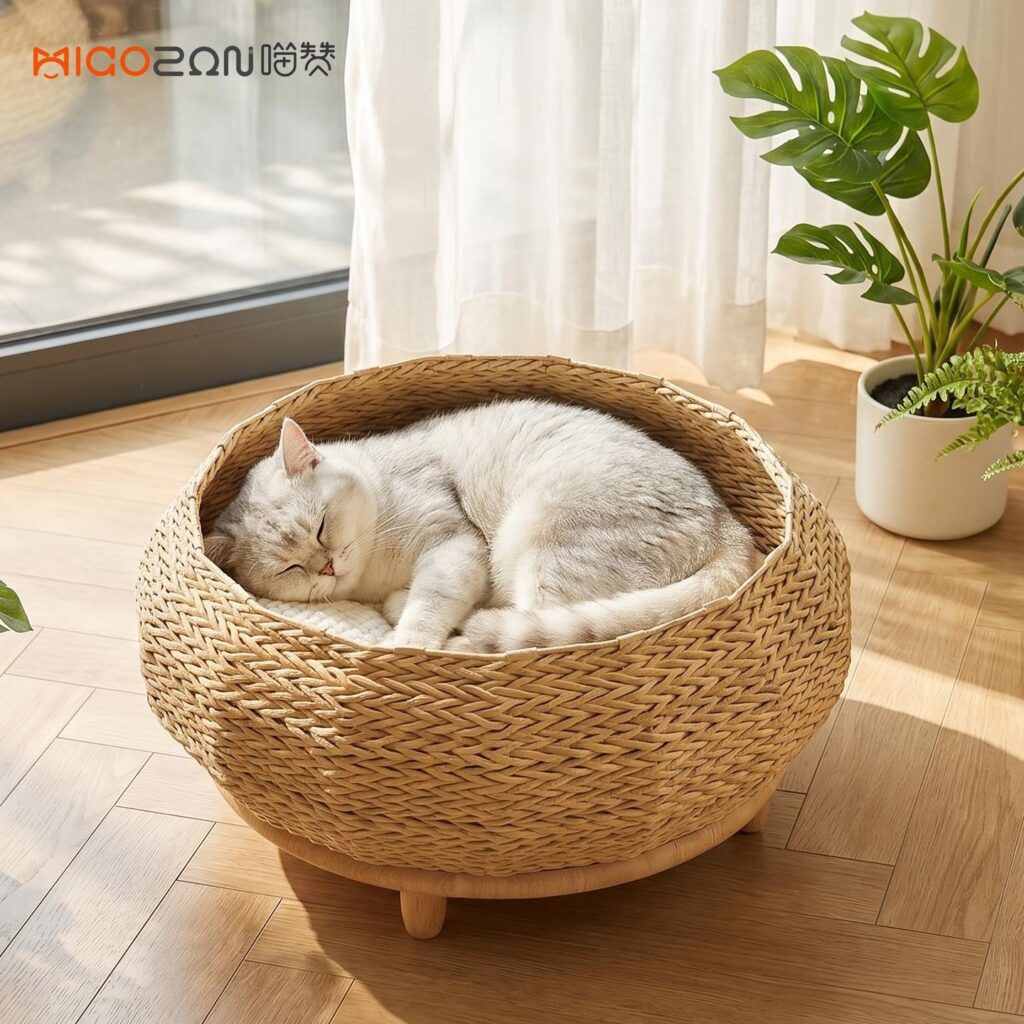
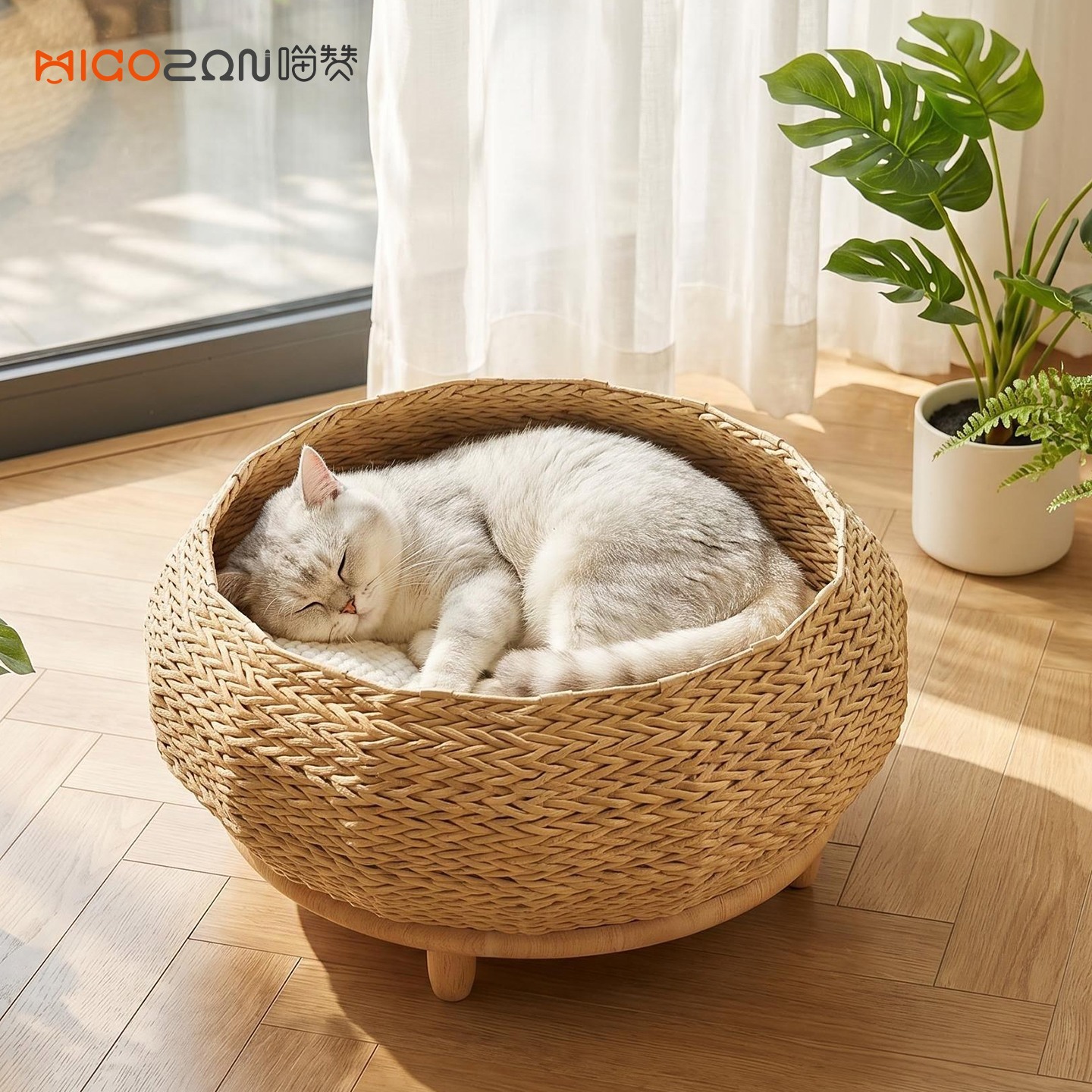
An open bed makes it easier to see approaching people and to leave in several directions. It may also allow a longer sleeping posture. That does not make it unsuitable for a shy cat if the location itself is quiet and protected. Sometimes a sheltered position with an open bed supplies the useful part of both options.
Compare the two styles at the point of use
| Question | Covered bed | Open bed |
|---|---|---|
| Can the cat watch the room? | Depends on entrance shape and direction | Usually a broad view around the resting area |
| Can it change position freely? | Limited by the true interior and roof | Depends mainly on the sleeping surface and sides |
| Is entry easy? | Doorway height and width need checking | Low or absent sides may be easier to cross |
| Is cleaning straightforward? | Interior seams and drying need attention | Surface may be easier to inspect and reach |
| Does it fit a warm location? | Check how the interior feels throughout the day | Still needs shade and alternative resting choices |
| How does another cat approach? | A single entrance can become crowded | Several approach and exit directions may be possible |
The table is a set of checks, not a scorecard. A well-sized covered bed in a calm position can work beautifully for one cat, while an open bed suits another. A poorly placed example of either style can be ignored. Keep the focus on the individual cat and the actual home.
Test shelter before committing to a style
Look at a current favorite resting spot. If the cat lies beneath a chair, notice whether its whole body is concealed or only the area above its head is covered. Check whether it faces into the room, toward a wall, or toward a door. These details suggest the kind of shelter to preserve.
A clean safe cardboard box can provide a simple voluntary hiding choice while you observe, provided it has no staples, loose tape, or damaged material the cat can eat. It is not a measurement substitute for a finished bed, and it should not be forced into use. The purpose is to see whether a sheltered option attracts calm rest in that location.
If the box is used only during play, the experiment has shown interest rather than a sleeping preference. Leave an open comfortable resting choice nearby. Compare ordinary naps over several days instead of steering the cat toward a preferred outcome. Room temperature and household activity can explain different choices at different times.
Ohio State University’s information on resting areas recognizes the need for comfortable places to withdraw. Your trial should therefore preserve the cat’s choice to rest undisturbed, whichever bed style it uses.
Make sure the inside is genuinely usable
Outside width can include thick walls, a shaped roof, decorative ears, and a deep rim. Ask for the interior sleeping dimensions and the entrance dimensions separately. A cat may fit through an opening while lacking enough room to turn comfortably once inside. The body of the bed should support a normal resting posture rather than merely contain the cat.
Check the roof at the points where the cat’s head and shoulders will be. A domed shape can be spacious in the middle but low at the sides. A soft shell may fold inward if the cat leans against it. Follow the manufacturer’s directions for shaping and support, and do not insert improvised rigid pieces with exposed edges.
The floor deserves attention too. A thick cushion may reduce headroom significantly. An extra blanket added for familiarity can further narrow the entrance and interior. Use only bedding that lies securely and leaves the original function intact. More padding is not always an improvement when the available space is already limited.
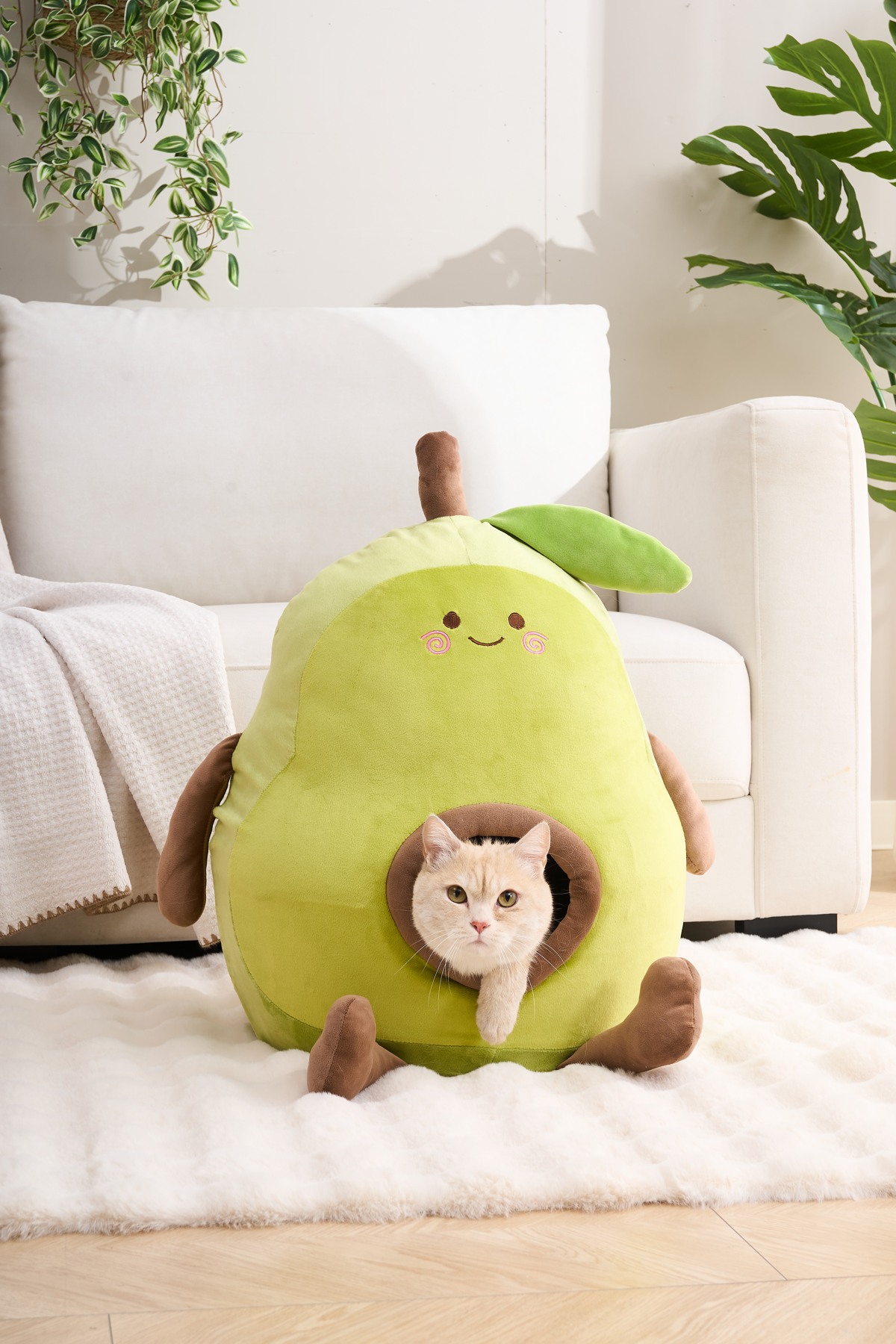
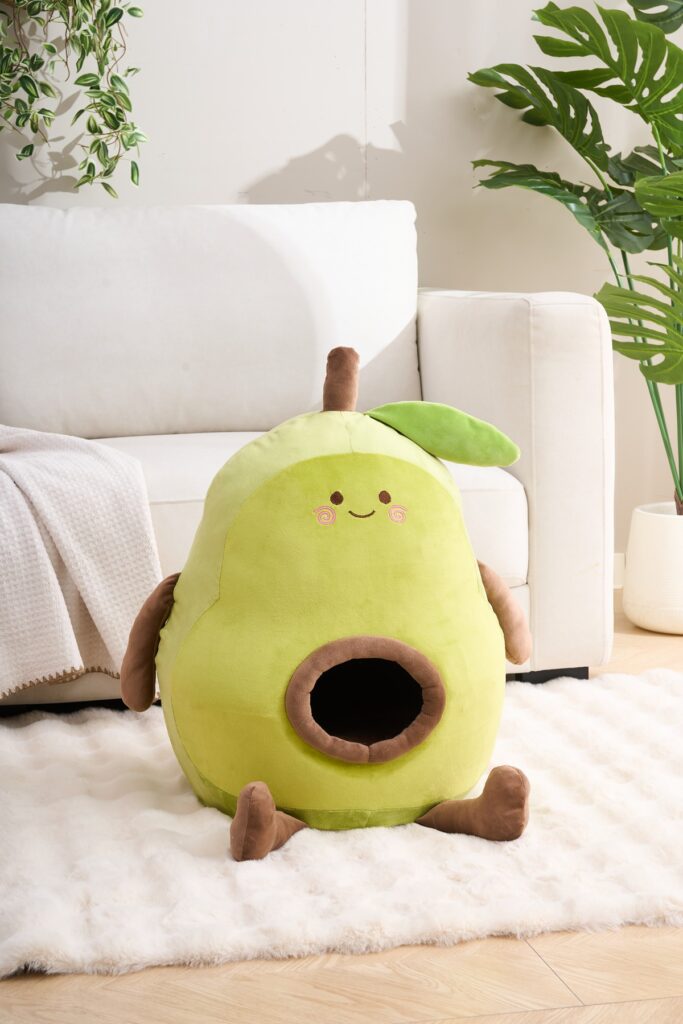
Compare the pictured openings of Miaomeng’s Avocado Cat House and Capybara Cat House. Confirm the exact model’s inner dimensions, entrance, and care instructions before deciding. Their decorative themes do not establish how sheltered or spacious they will feel to your cat.
Face the entrance toward a calm view
Place the covered bed where the cat can approach without being cornered by furniture or repeatedly passed at close range. An entrance that opens directly into a busy walkway may make the interior less restful. Turning it toward a quieter part of the room can change the experience without changing the bed itself.
Do not automatically point the entrance at a wall to create privacy. The cat still needs a comfortable approach and a useful way out. Leave enough room to enter and turn away. A narrow gap between the opening and a cabinet can make the bed difficult to use even though it looks neatly tucked away.
Keep people from reaching into the bed to wake or remove the cat unnecessarily. Children and visitors can learn that an occupied resting space is a place to leave alone. A cover offers little practical refuge if every retreat leads to hands entering the doorway. A calm open bed can be more restful than an enclosure that is constantly disturbed.
If there are several cats, watch access from outside. One cat resting beside the doorway may prevent another from leaving comfortably even without obvious fighting. Offer separate resting options and avoid arranging all of them at one narrow approach. A single large cave is not automatically the solution for a multi-cat home.
Let temperature influence the decision
A bed’s location can feel different in morning sun, afternoon heat, and a cool evening. Check the actual sleeping surface and, for a covered design, the interior. Keep the bed away from direct heater contact and follow any specific product guidance. Do not add a heating pad unless the combination is explicitly designed and instructed for that use.
Offer another resting choice when the room conditions vary. A cat moving from a cave to a hard floor may be responding to warmth rather than rejecting the covered style forever. Observe the pattern before changing the whole arrangement. A useful bed does not need to be occupied during every nap of the day.
Airflow and drying also belong in the decision. After cleaning, a shell can appear dry outside while seams or filling remain damp. Follow the care label and allow every part to dry fully before use. An open bed may be easier to inspect, but its filling still needs the same attention.
Introduce the bed without making it a destination
Put the bed in the chosen position and let the cat discover it. A small familiar clean cloth may be appropriate if it does not obstruct the entrance or create loose folds. Keep the old resting option available. The new bed will be more informative as a choice than as the only place left to lie down.
Avoid placing the cat inside and holding it there to demonstrate safety. Do not push treats far into a tight entrance to persuade an uncertain cat to squeeze in. You can acknowledge an approach calmly, then step away. The cat should be able to inspect and retreat without an audience gathered around the opening.
If the cat lies on top of a soft cave, check whether that use is intended by the maker. Some structures can be damaged or lose their opening when compressed. Do not assume every collapsible shape doubles as an open bed. Follow the product guidance and provide another suitable resting surface if the shell is being used in a way it cannot support.
Decide from the pattern, not one photograph
After several normal resting opportunities, compare duration, posture, and ease of approach. Does the cat settle deeply or repeatedly enter and leave? Does it choose the open bed only when the room becomes warm? Does it avoid the covered bed when another animal is nearby? These details help distinguish style preference from a problem with the position.
Make one adjustment at a time. You might turn the entrance, move the bed to a quieter edge, or remove an unnecessary blanket. Replacing the bed before checking those details can repeat the same problem in a new shape. Equally, do not keep pursuing a covered bed when the cat consistently rests comfortably in open places.
For an open alternative within Miaomeng’s range, review the Ruffled Floral Cat Bed alongside the houses. If you need help comparing current model information, use the form below with the sleeping posture, available location, and dimensions you need. Choose the resting experience first and the decorative theme afterward.
Frequently asked questions
Is a covered cat bed better for every shy cat?
No. Some shy cats prefer a sheltered position with a clear view and several ways to leave. Offer suitable choices and watch voluntary rest. Do not assume personality alone determines one correct bed shape.
Why does my cat enter a covered bed and leave immediately?
It may be investigating, or the interior, temperature, entrance, or location may not suit a long nap. Check the usable space and approach before deciding the style is wrong. Avoid repeatedly putting the cat back inside.
Can I put a covered bed by a window?
Only if the position remains comfortable, stable, and appropriately shaded, with secured windows and cords out of reach. Check the interior over the day. A bright morning position can become too warm later, so keep another resting choice available.
Should I remove the open bed to encourage use of the covered one?
Keep a familiar successful resting option available during the trial. Voluntary choice gives better information about comfort. Removing alternatives can create disruption without making the new enclosure more appealing.
Is a covered bed harder to clean?
It can be, especially around interior seams and filling, but the exact care label matters. Confirm which parts are removable and washable. Allow every layer to dry fully before reassembling or returning the bed to use.
More from our resource center.
-

Covered Cat Bed or Open Bed: Which Suits Your Cat?
Compare a covered cat bed with an open bed through shelter, visibility, entrance size, temperature, and voluntary sleeping habits at home.
Read Guide -
Cat Scratch Mat Placement: Protect the Spot Your Cat Already Targets
Place a cat scratch mat where your cat already scratches, align it with the movement, and check fitting, flat edges, and safe household access.
Read Guide -
Tall Scratching Post: How Much Stretching Room Does Your Cat Need?
Choose a tall scratching post by checking continuous scratching height, standing room, overhead clearance, and stability for your cat's reach.
Read Guide -
Do Cats Need Cat Trees? What Indoor Cats Need From Their Space
Do cats need cat trees? Review your cat's climbing, resting, scratching, and observation choices to see what a tree would add to your home.
Read Guide -
Cat Bed Buying Guide: Match the Bed to How Your Cat Sleeps
Choose a cat bed that suits your cat's sleeping position, usable space, entry needs, and cleaning routine, with practical checks before buying.
Read Guide -
Horizontal Cat Scratcher: Is It Right for a Carpet-Scratching Cat?
Choose a horizontal cat scratcher by watching your cat's posture, checking floor grip, and placing the pad where carpet scratching already happens.
Read Guide
LET’S BUILD YOUR NEXT COLLECTION
Start with your market.
We’ll work through the details.
Send your selected models, target quantity and customization requirements.