
← Buyer Resources
Cat Scratch Mat Placement: Protect the Spot Your Cat Already Targets
Place a cat scratch mat where your cat already scratches, align it with the movement, and check fitting, flat edges, and safe household access.
Contents
Put a cat scratch mat at the place your cat already chooses to scratch, orient it to match the movement, and secure it exactly as its maker directs. For floor scratching, the mat needs to lie flat without sliding or curling. For an upright target, use only a product designed and fitted for that purpose. A mat hidden across the room is unlikely to replace an appealing sofa corner or rug edge.
Begin by identifying the target accurately. The side of a sofa, the carpet below it, and a rug beside it are three different scratching locations. Covering one does not automatically provide a useful alternative for the others. A little observation before fitting can save a great deal of rearrangement afterward.
Work through the location your cat already chose
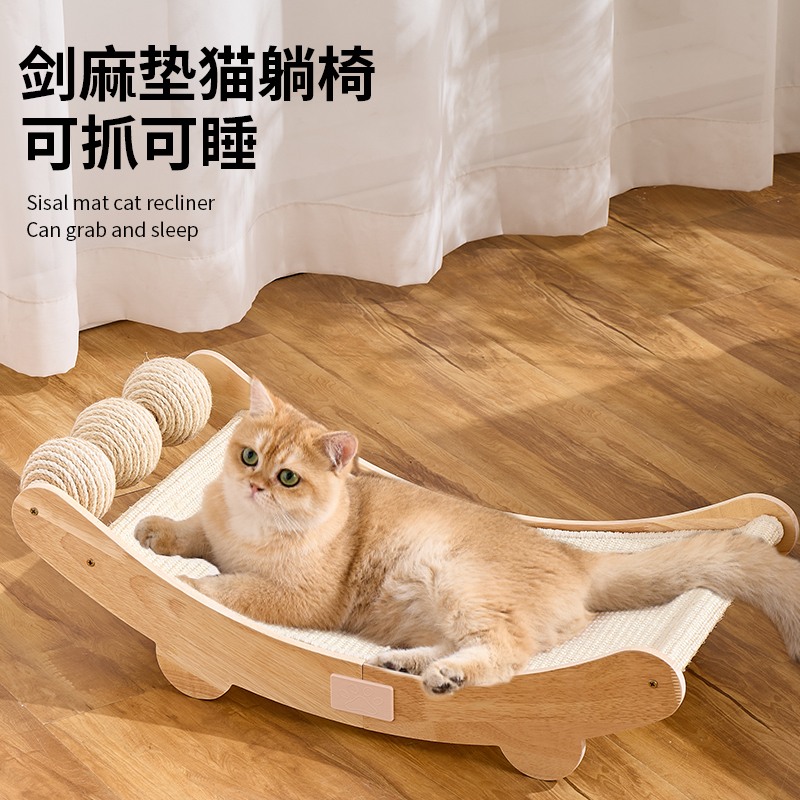
Scene one: the favorite patch beside the sofa
Watch where your cat stands before its paws meet the surface. A floor mat works best when it covers the area the front paws naturally reach while leaving a comfortable stance for the rest of the body. If the cat stretches forward from the rug, position the mat lengthwise along that movement rather than sideways to match the sofa edge.
Keep the mat close enough to be obvious. Putting it behind the sofa because it is less visible removes it from the familiar route. A discreet spot is useful only if the cat willingly reaches it. Look for a compromise that preserves the chosen location while leaving a safe walking route for people.
Test the mat when the room is used normally. A reclining footrest may push it aside, a hanging blanket can cover it, and a side table can take away the approach. A layout that works in an empty room can fail as soon as someone sits down. Settle into the sofa and inspect the arrangement again.
If the sofa itself is the upright target, a loose floor mat is a different option, not a fitted protective panel. Do not drape an unsuitable mat over the arm and hope friction will hold it. Use an appropriate fitted product or offer a stable scratching post beside the target, with safe protection for the furniture where needed.
Scene two: a rug corner that keeps lifting
A curled rug edge already moves under the cat’s paws. Adding another curled layer can make the floor less predictable for both the cat and the people walking past. Flatten or remove unsafe loose edges before introducing the mat. Do not hide damaged threads or staples beneath it and assume they are out of reach.
Choose the position by the cat’s movement, but check floor safety as well. The mat should not extend into a narrow doorway or become a raised lip in a frequently used route. A suitable nonslip backing may help if it is compatible with the floor and allowed by the product instructions. Keep all edges tidy and inspect them after use.
Observe what the cat does with a new edge. Scratching on the intended face is different from lifting, biting, and pulling apart the border. If loose fibers or backing become accessible, remove the damaged mat. A product that is attractive to chew is not functioning as a safe scratching surface simply because the cat spends time with it.
Cleaning around the mat matters. Lift it according to the care instructions and check the floor for grit, trapped moisture, or loose debris. A mat can look tidy from above while dirt underneath makes it slide. Return it only when the floor and the backing are suitable for use together.
Scene three: the busy doorway
Doorway scratching can be part of a familiar greeting, a stretch, or attention to a closed door. Map the area before fitting anything. Open the door fully, walk through carrying a bag, and look at where the cat waits. Do not put a mat where it will catch under the door or force someone to step over the cat.
The nearest safe adjacent spot may be better than the exact center of the damaged patch. Keep the alternative visible along the same route. If a door sweeps across the proposed area, choose a different arrangement rather than repeatedly allowing the mat to bunch up. Consistent access is more useful than a perfectly centered position that fails every time the door moves.
If scratching occurs only when access is blocked, consider the routine on both sides of the door. The mat supplies a scratching surface but does not answer why the cat wants through. Avoid repeatedly opening and closing the door as an exciting reaction to scratching. Work toward a calm predictable arrangement that fits the household.
In a narrow hall, a freestanding post in an adjacent room may be more practical than a floor mat across the route. You can still keep the alternative close to the established target. Product type should follow the usable space, not force the household into an awkward obstacle course.
Fit the mat to its intended surface
Read the instructions before attaching anything. Some mats are designed only for floors; others have a specific fitting system for a particular location. A flat photograph cannot tell you which installation is appropriate. Ask for clarification if the instructions leave the surface, attachment, or use position uncertain.
Avoid exposed ties, loose straps, improvised pins, and accessible adhesive. These may be pulled loose or caught by claws. If the product uses a fitting system, it should be installed and finished as directed. Furniture protection should not introduce loops hanging beside a resting or playing area.
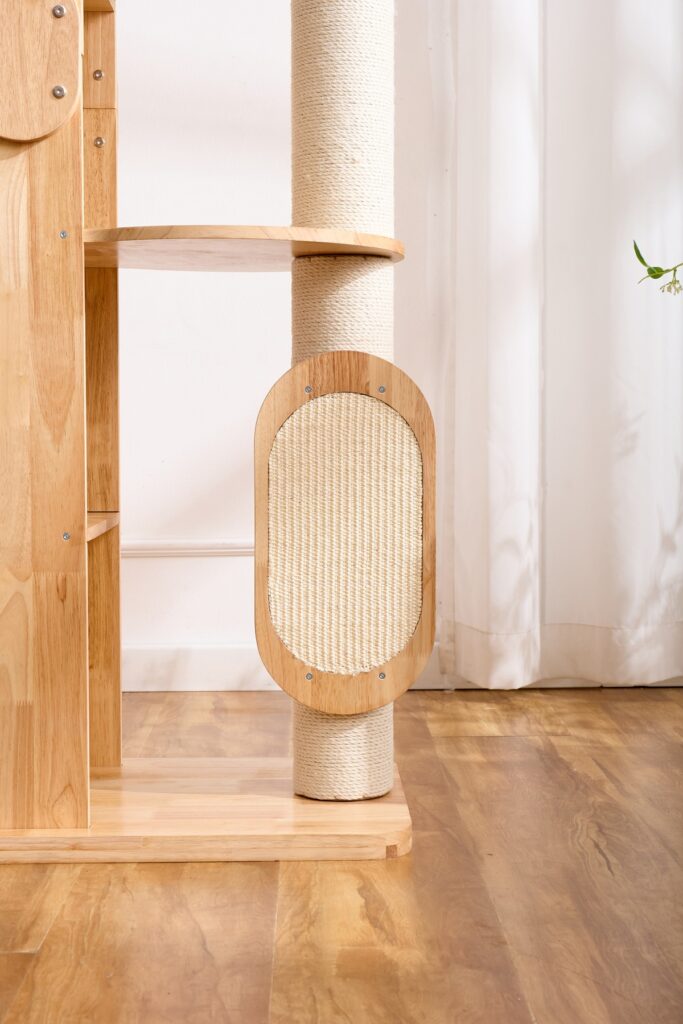
Check the surface underneath for suitability. Adhesives can affect finishes, and some backing materials may mark floors or upholstery. Follow both the mat guidance and the furniture or flooring care guidance. Test only where permitted, and do not use a permanent attachment as a substitute for understanding whether the location works.
After fitting, inspect the whole usable face. It should be accessible without folds that hide part of the surface or corners that lift during a pull. If the mat cannot stay correctly positioned, remove it until the installation can be resolved. Repeatedly smoothing it after the cat has already slipped is not a dependable routine.
Match the texture before changing every location
Your cat may like the place but dislike the new surface. Rough woven material, carpet-like fabric, and cardboard offer different sensations under the claws. Observe which accepted scratching material is already used elsewhere in the home. That gives you a better starting point than choosing solely by color.
The Ohio State University scratching resource highlights the importance of matching a cat’s preferred scratching material. Keep that single variable in mind when testing a mat at an established location.
Do not make several changes together. If you move the mat, add fragrance, cover the old target, and change the texture on the same day, the result becomes hard to interpret. Start with appropriate placement and secure fitting. Then review the surface if the cat still chooses the neighboring target.
A mat is one format, not the only answer. Miaomeng’s Jute Slipper Scratcher and Bone-shaped Cat Scratcher are different scratcher shapes to compare if a fitted or flat mat does not suit the space. Check the product details for their exact materials and dimensions; their presence in the range does not mean they install like mats.
Build a simple placement record
Use five lines in a notebook rather than a long diary:
- Target and direction: name the location and describe the pull.
- Standing area: note where the back feet remain.
- Movement: record a sliding base or lifting corner if one appears.
- Opportunity: note the ordinary event, such as waking from a nap.
- Outcome: distinguish voluntary use from fresh damage elsewhere.
Take a starting photograph of the old damage and note the first few normal uses. You do not need to watch continuously. A small record can stop you replacing a workable mat because you noticed an old loose thread, or overlooking ongoing damage because one cat used it once.
In a home with several cats, write down which cat used the mat. A confident cat may occupy the area while another avoids it. Separate scratching choices in different resting or passing areas can make the arrangement easier to use than one shared target at a crowded doorway.
Help the cat notice it calmly
Leave the mat available for voluntary investigation. A brief play session nearby can bring the cat into the area, but put wand toys and strings away afterward. Do not push the cat’s paws over the surface. The aim is for it to discover a satisfying movement, not endure a handling exercise.
When the cat scratches the intended area, a quiet familiar reward can reinforce that choice. Avoid turning every approach into an exciting event that interrupts the action. Some cats will inspect, sit, or rest on a mat before scratching; those behaviors do not by themselves establish whether the final position is right.
Protect a vulnerable neighboring surface safely while leaving the acceptable option convenient. Do not use frightening noises or painful deterrents. If a new arrangement appears to make the cat anxious, step back and review access, location, and how people react around the target.
Know when to choose another format
A mat may be the wrong choice if it cannot stay flat in the available place, if the cat needs a full upright stretch, or if the fitting would leave unsafe loose parts. A rigid pad, a stable post, or a different location may solve that particular problem more simply. Choosing another format is a useful result of the trial, not a failure to train the cat.
Remove damaged material promptly, especially if the cat pulls it apart with its mouth. Seek veterinary advice if pieces are swallowed or if scratching changes suddenly alongside discomfort or reluctance to move. A placement adjustment should not delay care for a health concern.
If you are comparing a Miaomeng scratcher with a mat you already own, describe the target, the available space, and the cat’s paw direction in the form below. Include the exact model name. Those practical details help identify a useful shape without assuming that every scratching problem needs the same product.
Frequently asked questions
Where should I put a cat scratch mat first?
Start beside the existing target, aligned with the cat’s usual scratching movement. Keep a clear approach and check that the mat does not become a trip hazard, curl under a door, or move when used.
Can I attach any scratch mat to the side of a sofa?
No. Use only a product intended for that position and fit it according to its instructions. A loose floor mat may slip or leave unsafe hanging parts when draped over furniture. Check compatibility with the sofa’s material too.
Why does my cat scratch the floor beside the mat?
The mat may be too small, unstable, misaligned, or different in texture from the preferred surface. Watch the stance and the first contact with the paws. Adjust one detail at a time so you can tell which change helps.
Should I add catnip to the mat?
It is optional and does not replace correct fitting or placement. If you use a cat product, follow its directions and apply it sparingly. Some cats do not respond, and rolling on the mat does not necessarily mean it will become a scratching choice.
How often should I inspect the edges?
Check regularly during ordinary cleaning and after vigorous use. Remove the mat if it develops accessible loose threads, damaged backing, or curled edges that cannot be corrected as instructed. Wear patterns matter more than a fixed replacement date.
More from our resource center.
-

Cat Scratch Mat Placement: Protect the Spot Your Cat Already Targets
Place a cat scratch mat where your cat already scratches, align it with the movement, and check fitting, flat edges, and safe household access.
Read Guide -
Tall Scratching Post: How Much Stretching Room Does Your Cat Need?
Choose a tall scratching post by checking continuous scratching height, standing room, overhead clearance, and stability for your cat's reach.
Read Guide -
Do Cats Need Cat Trees? What Indoor Cats Need From Their Space
Do cats need cat trees? Review your cat's climbing, resting, scratching, and observation choices to see what a tree would add to your home.
Read Guide -
Cat Bed Buying Guide: Match the Bed to How Your Cat Sleeps
Choose a cat bed that suits your cat's sleeping position, usable space, entry needs, and cleaning routine, with practical checks before buying.
Read Guide -
Horizontal Cat Scratcher: Is It Right for a Carpet-Scratching Cat?
Choose a horizontal cat scratcher by watching your cat's posture, checking floor grip, and placing the pad where carpet scratching already happens.
Read Guide -
How to Choose a Scratching Post Your Cat Will Use
Learn how to choose a scratching post by matching scratching direction, surface, usable height, stability, and placement to your cat’s habits.
Read Guide
LET’S BUILD YOUR NEXT COLLECTION
Start with your market.
We’ll work through the details.
Send your selected models, target quantity and customization requirements.